1. Project Overview
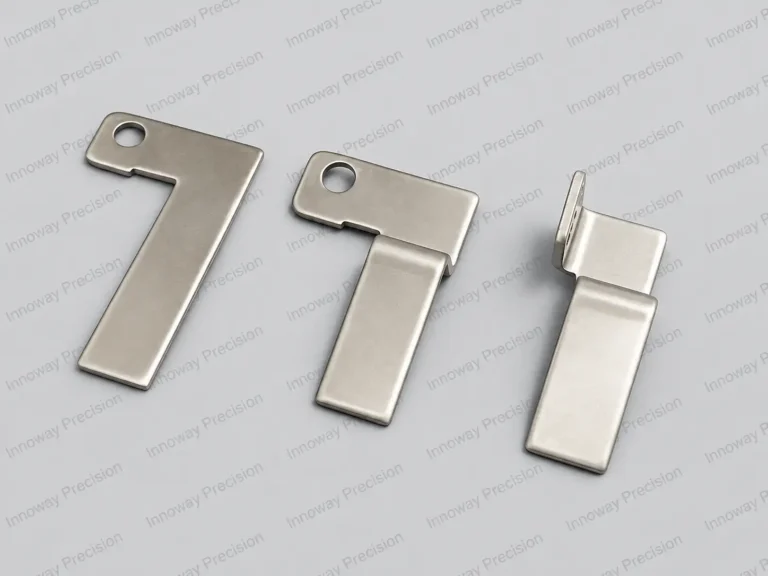
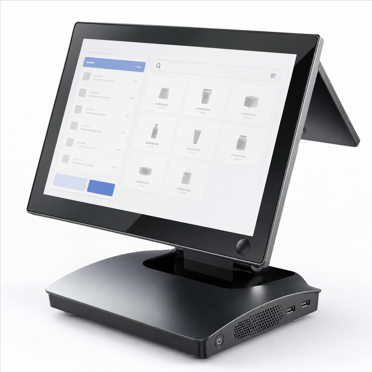
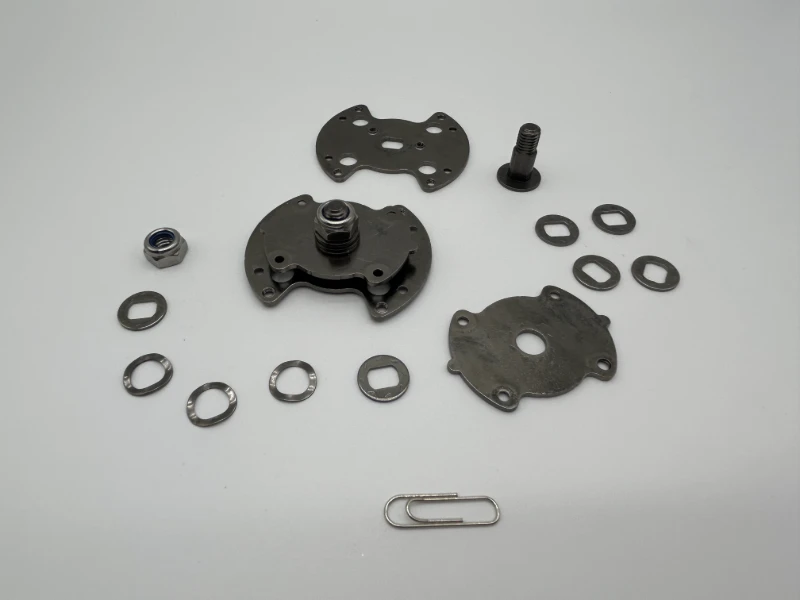
This project involved a custom torque hinge designed for rotating display screens used in restaurants and supermarkets. The display needs to be turned frequently by staff during daily operation, while remaining stable at the required viewing position.
Unlike a conventional hinge that simply connects two parts, this component must provide controlled rotational resistance. If the torque is too low, the screen may move or drop from position. If the torque is too high, frequent adjustment becomes difficult for the operator.
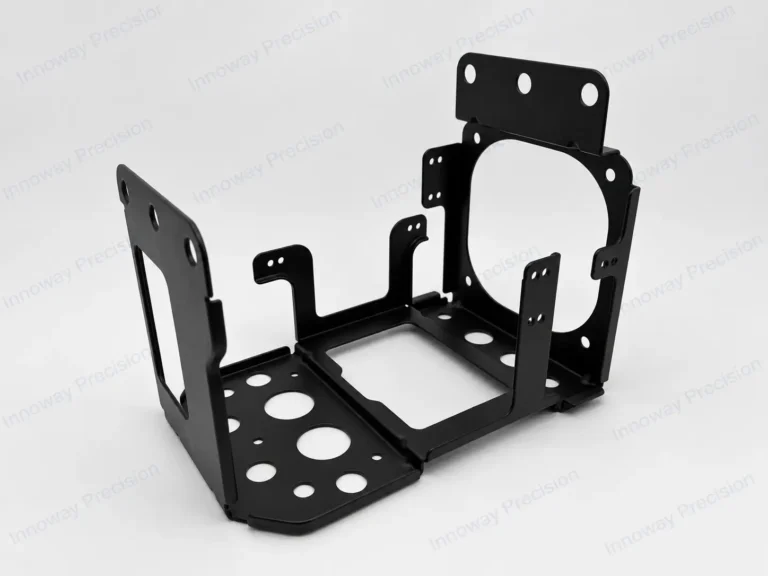
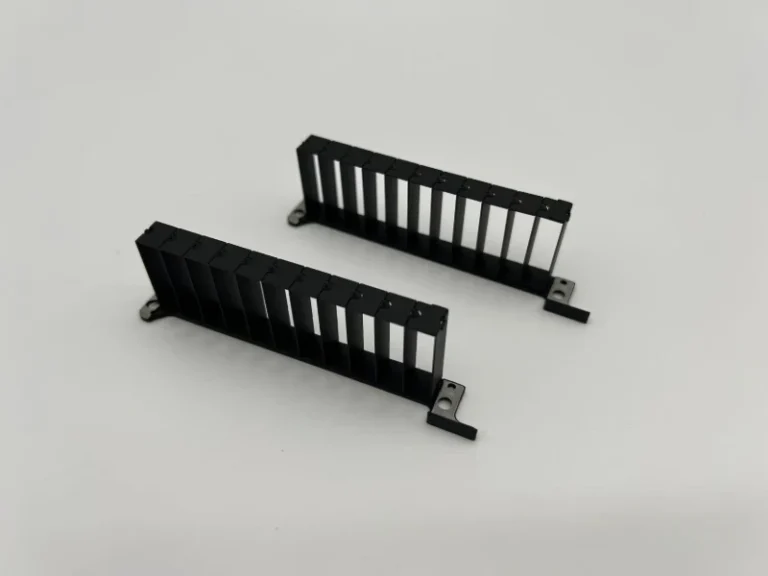
The hinge is manufactured from SK7 carbon tool steel through precision stamping, black nickel plating and mechanical assembly. The final operating torque requirement is 25 kgf·cm (approximately 2.45 N·m).
2. Technical Challenges
2.1 Stable Torque During Repeated Rotation
The most important requirement was maintaining consistent rotational resistance. Because the display screen is frequently adjusted by restaurant or supermarket staff, the hinge must rotate smoothly while providing enough resistance to hold the screen securely in position.
Small variations in washer thickness, stamped-part flatness, surface condition and assembly preload can directly affect the final torque.
2.2 Controlling the Multi-Part Assembly
This hinge consists of several stamped components, washers, pivot parts and fastening hardware. Even when every individual part meets its dimensional tolerance, accumulated variation during assembly can still cause differences in operating torque.
For this reason, controlling only the stamped dimensions was not sufficient—the complete hinge assembly had to be treated as one functional system.
2.3 Surface Finish Without Affecting Function
The hinge uses a black nickel plated finish to achieve a clean appearance suitable for commercial display equipment.
However, surface treatment can also influence friction between mating parts. Therefore, plating quality and assembly conditions had to be controlled together to avoid unnecessary variation in rotational resistance.
3. Our Solution
3.1 Dedicated Assembly Fixture for Consistent Accuracy
To improve assembly consistency, we developed a dedicated assembly fixture specifically for this torque hinge.
The fixture helps control the positioning of the stamped components, washers and pivot structure during assembly, reducing variation caused by manual positioning and helping maintain consistent alignment from part to part.
This is especially important for a torque hinge because even small assembly deviations can influence rotational resistance and long-term performance.
3.2 Torque Validation for Every Hinge
After assembly, each hinge is functionally checked to verify that the operating torque meets the required specification. The target torque for this project is: 25 kgf·cm (approximately 2.45 N·m).
Rather than relying only on dimensional inspection, we verify the actual rotational performance of the completed hinge to ensure that the display screen can rotate smoothly while remaining stable in the required position.
3.3 Fatigue Testing for Long-Term Reliability
Torque at the initial stage is only one part of the performance requirement. Because these hinges are used on rotating display screens in restaurants and supermarkets, they may be opened, rotated and repositioned many times during daily use.
For this reason, we also conduct fatigue testing to evaluate torque retention and mechanical stability after repeated rotation cycles.
To make the test more consistent and repeatable, we designed a dedicated fatigue testing device specifically for this type of hinge. The equipment repeatedly rotates the hinge under controlled conditions, allowing us to evaluate whether the hinge maintains stable performance after extended cycling.
A video of the fatigue testing process will also be added to this page to provide a clearer view of the actual validation method.
3.4 From Assembly Accuracy to Functional Reliability
For this project, our control process is not limited to checking whether the parts fit together correctly. We focus on three key points:
Dedicated Assembly Fixture → 100% Torque Verification → Fatigue Testing
This helps ensure that the finished hinge not only meets the required torque when it leaves our factory, but also maintains reliable rotational performance during repeated use.
Watch the Torque & Fatigue Test Video on YouTube:
The video shows the actual testing process, including torque verification and fatigue testing
4. Project Result
The completed hinge achieved the required 25 kgf·cm operating torque, providing controlled and stable rotation for the display screen.
For restaurant and supermarket applications, this allows staff to rotate the screen when needed while helping the display remain securely positioned during use.
The project also demonstrated an important manufacturing principle:
For a torque hinge, dimensional accuracy is only the foundation. Final performance depends on stamping accuracy, friction control, surface treatment and assembly consistency working together.
By combining precision stamping, black nickel plating, controlled assembly and functional torque testing, Innoway Precision was able to deliver a complete mechanical hinge assembly rather than simply supplying individual stamped components.
Frequently Asked Questions
A torque hinge, also known as a friction hinge, generates controlled rotational resistance so that a screen, panel or lid can remain stable at the desired position instead of rotating freely.
The required torque depends mainly on the weight of the display, the distance between its center of gravity and the hinge axis, the number of hinges and the installation position. For custom projects, these parameters should be evaluated before defining the final hinge torque.
Initial torque alone cannot confirm long-term reliability. Repeated cycle testing helps evaluate whether the hinge can maintain stable rotational resistance and mechanical performance after frequent opening, closing and repositioning. Cycle life and torque retention are therefore common performance criteria for torque hinges.
The target operating torque for this project is 25 kgf·cm, approximately 2.45 N·m. Each assembled hinge is functionally verified to ensure stable rotational resistance for the rotating display application.
Yes. Custom torque hinges can be developed according to the customer’s target torque, mounting configuration, dimensions, opening angle, material, surface finish and application requirements. Custom mounting and torque configurations are common options in engineered friction-hinge projects.
Torque hinges are widely used for POS displays, rotating screens, monitor stands, control panels, industrial equipment, electronic devices and other adjustable panels that need controlled positioning. Display panels and POS equipment are established applications for this type of hinge.