1. Project Overview
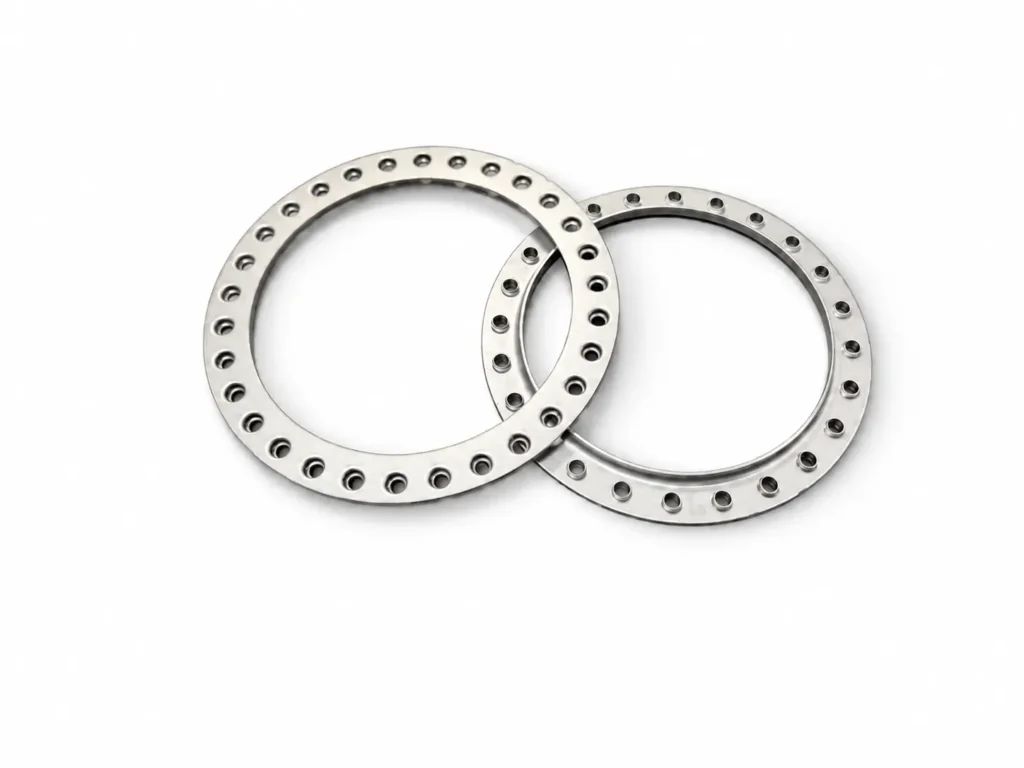
This project involves a precision-stamped ring used in automotive transmission applications. For this part, our focus is not only on stamping accuracy, but also on handling, inspection, rust protection and packaging.
2. Quality Control Throughout the Process
During stamping, operators wear rubber gloves when collecting parts to avoid bare-hand contact and reduce surface contamination.
Key dimensions are checked during production to verify part consistency. After inspection, the parts go through an automated rust-preventive oil dipping process for corrosion protection.
Before packaging, every part receives 100% visual inspection. Operators follow documented appearance criteria to maintain a consistent inspection standard.
Qualified parts are then carefully protected, packed, labeled and prepared for shipment.
3. Manufacturing Process Video
The video below shows the complete process:
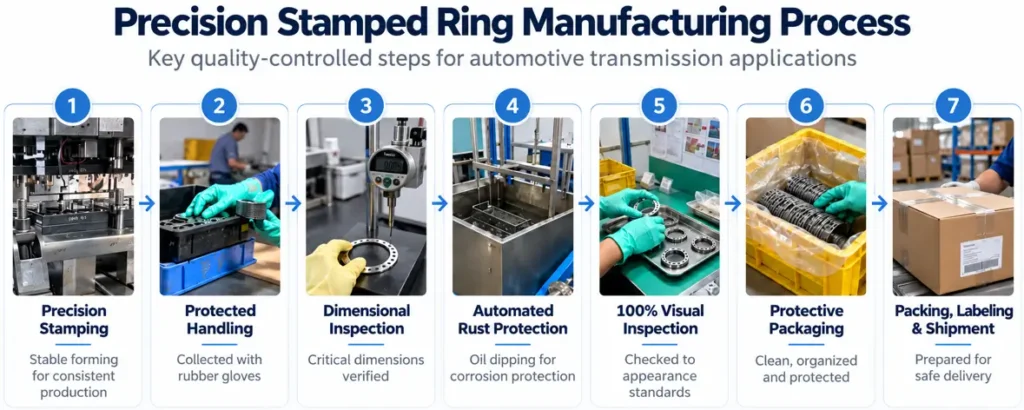
At Innoway Precision, quality is controlled step by step — from the press to final shipment.
FAQ
Precision stamped rings can be used for protection, positioning, spacing, support, or other internal transmission functions, depending on the specific design and application.
Key dimensions are checked during production using suitable measuring tools and inspection methods to confirm that the parts remain within the required specifications.
Rust-preventive oil helps protect metal surfaces from moisture and corrosion during storage, handling, transportation, and delivery.
100% visual inspection helps identify surface defects, contamination, deformation, or other appearance issues before the parts are packed and shipped.
Bare-hand contact can leave fingerprints, sweat, moisture, and contaminants on metal surfaces. These residues may affect surface cleanliness and increase the risk of staining or corrosion, so gloves are used during handling and inspection.