A rivet nut torque test is an important quality inspection for sheet metal assemblies using blind rivet nuts, threaded rivets, or nutserts. A rivet nut may look properly installed, but visual inspection alone cannot confirm whether it will remain secure when a screw is tightened. For this reason, torque testing is commonly used during first article inspection and process validation.
1. What Does a Rivet Nut Torque Test Measure?
For an installed rivet nut, the most important rotational performance value is usually spin-out torque. Spin-out torque is the amount of torque required to make the installed rivet nut begin rotating inside the mounting hole, so it directly reflects whether the rivet nut can resist the rotational force generated during screw installation or removal.
For example, if the required assembly torque is 5 N·m but the rivet nut begins to rotate at 4 N·m, the joint is not reliable even if the rivet nut passes a pull-out test.
2. Spin-Out Torque vs. Torque-Out Torque
These two terms are often confused, but they describe different failure modes.
Spin-Out Torque: Spin-out torque measures the torque required to make the entire rivet nut rotate inside the sheet metal. This test mainly evaluates the mechanical locking strength between the rivet nut and the parent material.
Torque-Out Torque: Torque-out torque measures the torque required to damage or strip the internal thread while the rivet nut itself is prevented from rotating. Therefore, when checking whether a rivet nut will rotate after riveting, spin-out torque is the more relevant test value.
3. Why Is Spin-Out Resistance Important?
If a rivet nut begins rotating during screw installation, the screw may fail to reach the specified tightening torque, the rivet nut may rotate together with the screw, or the fastener may become impossible to remove during maintenance. In severe cases, the mounting hole may become enlarged and the entire threaded joint may lose its clamping function.
For this reason, a reliable riveted threaded joint must resist both axial forces and rotational forces.
4. How Is a Rivet Nut Torque Test Performed?
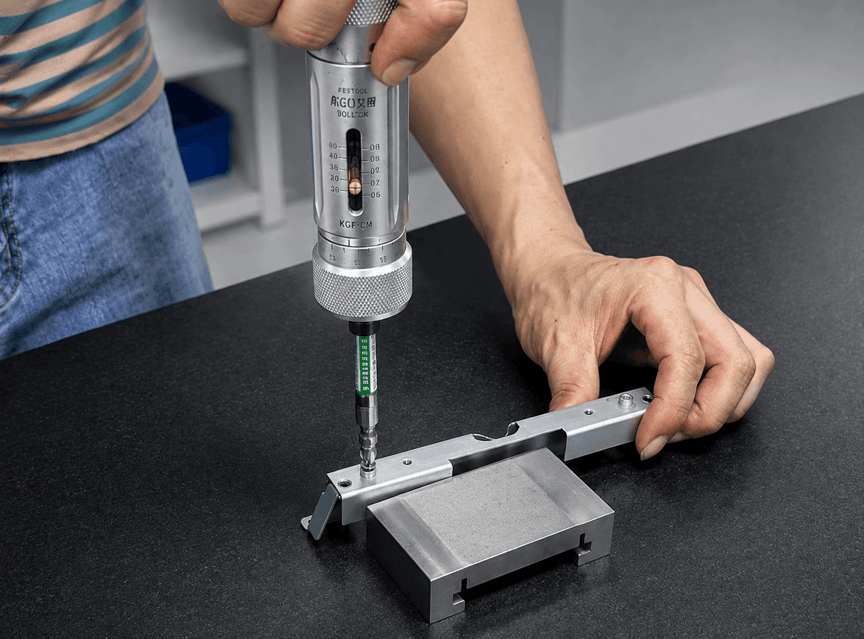
The test method is relatively simple. First, the riveted sheet metal component is securely fixed, and a suitable bolt is threaded into the installed rivet nut. Torque is then gradually increased using a calibrated torque wrench or torque tester.
The inspector records the torque value when the rivet nut first begins to rotate relative to the parent material. This value can then be compared with the required assembly torque or the approved internal acceptance standard.
5. What Test Conditions Should Be Controlled?
To obtain meaningful and repeatable results, several test conditions should remain consistent.
| Test Condition | What Should Be Controlled | Why It Matters |
|---|---|---|
| Bolt Specification | Bolt grade, thread size, and engagement length | Different bolt conditions can affect the measured torque result. |
| Mounting Hole Diameter | Keep the hole within the rivet nut manufacturer’s recommended tolerance | An oversized hole can significantly reduce spin-out resistance. |
| Sheet Thickness | Ensure the sheet thickness is within the specified grip range | Incorrect thickness may prevent proper deformation and clamping. |
| Riveting Parameters | Control installation stroke, setting force, and riveting equipment | Insufficient setting can result in poor rotational resistance. |
| Surface Condition | Keep lubrication, plating, coating, and friction conditions consistent | Surface friction can influence the measured torque value. |
– Bolt Specification
The bolt grade, thread specification, and engagement length should remain consistent during comparison testing because changes in the bolt condition can affect the measured torque.
– Mounting Hole Diameter
The mounting hole must remain within the recommended tolerance. An oversized hole reduces mechanical engagement between the rivet nut and the parent material and can significantly lower spin-out resistance.
– Sheet Thickness
The sheet thickness must fall within the specified grip range of the rivet nut. If the material is too thin or too thick for the selected rivet nut, the formed joint may not achieve sufficient clamping strength.
– Riveting Parameters
The installation stroke, setting force, and riveting equipment must be properly controlled. Insufficient deformation can produce a visually acceptable rivet nut that still has poor rotational resistance.
– Surface Condition
Lubrication, plating, coatings, washers, and friction conditions can influence the measured torque result, so these conditions should be kept consistent during validation.
6. What Is a Good Rivet Nut Torque Value?
There is no single torque value that can be applied to every M4, M5, M6, or M8 rivet nut. The final spin-out torque depends on the rivet nut material, thread size, body shape, sheet material, sheet thickness, hole diameter, grip range, setting force, and surface treatment.
Therefore, the acceptance standard should normally follow this priority:
Customer requirement → approved fastener specification → manufacturer data → actual assembly torque → internal inspection standard
The verified spin-out torque should provide a reasonable safety margin above the actual screw tightening torque used in the final product.
7. Why Does a Rivet Nut Fail the Torque Test?
Several manufacturing factors can cause low spin-out torque.
Oversized Mounting Hole: If the hole is too large, the rivet nut cannot generate enough mechanical engagement with the sheet, making it easier for the rivet nut to rotate under tightening torque.
Insufficient Riveting Force: If the rivet nut is under-set, the backside deformation may not clamp the sheet securely enough. The rivet nut may appear installed correctly but still fail the torque test.
Incorrect Grip Range: The selected rivet nut must match the actual material thickness. An incorrect grip range can result in insufficient deformation, poor clamping force, and unstable installation.
Thin or Soft Parent Material: Thin aluminum, plastic, or other soft materials may deform before the rivet nut reaches the expected rotational strength, reducing the overall spin-out resistance of the joint.
Incorrect Rivet Nut Design: Smooth round rivet nuts generally provide less anti-rotation performance than knurled, hexagonal, square, or other anti-rotation designs in suitable applications. When higher torque resistance is required, the rivet nut body design should be considered during the initial product design stage.
8. Why Is Torque Testing Important During First Article Inspection?
A threaded rivet joint should not be accepted only because it looks correct. For automotive brackets, electrical enclosures, industrial equipment, sheet metal housings, and structural assemblies, the more important question is whether the rivet nut will remain securely fixed when the customer tightens the screw.
Torque testing helps answer this question before mass production begins. It can also identify problems with hole size, rivet nut selection, sheet thickness, or riveting parameters before defective parts reach the customer.
Frequently Asked Questions
A rivet nut torque test evaluates the rotational strength of an installed rivet nut. The most common value is spin-out torque, which is the torque required to make the rivet nut begin rotating inside the mounting hole.
There is no universal torque value for all rivet nuts. The result depends on thread size, material, body design, sheet thickness, hole diameter, grip range, and installation conditions.
Common causes include an oversized hole, insufficient setting force, incorrect grip range, soft parent material, incorrect rivet nut selection, or excessive tightening torque.
Spin-out torque measures when the entire rivet nut begins rotating inside the panel, while torque-out torque measures internal thread failure when the rivet nut itself is prevented from rotating.
Spin-out resistance can often be improved by controlling hole size, selecting the correct grip range, optimizing installation force or stroke, and using knurled, hexagonal, square, or other anti-rotation rivet nut designs when required.
Yes. For products where screws are tightened into rivet nuts, torque testing is an effective way to confirm that the installed rivet nut can withstand the expected assembly torque without rotating.