1. Understand What “18-8” Actually Means
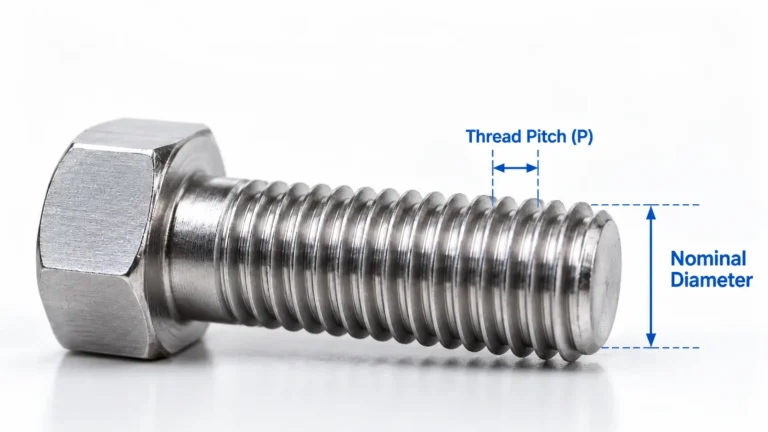
The term 18-8 stainless steel generally describes austenitic stainless steels containing approximately 18% chromium and 8% nickel.
However, 18-8 is not a single standardized material grade. Several stainless steels can fall within the broader 18-8 family, with Type 304 being the best-known example. Nickel Institute technical guidance similarly describes Type 304 as a widely used 18-8 stainless steel and notes that several related grades can be regarded as 18-8 materials.
This distinction matters in manufacturing. If a drawing simply states “18-8 stainless steel,” the exact chemical composition, mechanical properties and applicable standard may not be sufficiently defined. For critical sheet metal or stamping projects, specifying 304, 304L, 316 or 316L together with the relevant material standard is normally a better engineering practice.
2. 18-8 vs 304 vs 316: Quick Comparison
| Item | 18-8 Stainless Steel | 304 Stainless Steel | 316 Stainless Steel |
|---|---|---|---|
| Material definition | General description | Defined grade | Defined grade |
| Typical chromium | About 18% | 17.5–19.5% | 16.0–18.0% |
| Typical nickel | About 8% | 8.0–10.5% | 10.0–14.0% |
| Molybdenum | Not specifically defined | Not required | 2.0–3.0% |
| General corrosion resistance | Depends on actual grade | Very good | Excellent |
| Chloride resistance | Depends on actual grade | Moderate | Better |
| Formability | Depends on actual grade | Excellent | Good to excellent |
| Relative material cost | Cannot be defined by the term alone | Lower | Higher |
| Common applications | Fasteners and general stainless products | Sheet metal, food equipment, housings, brackets | Marine, chemical and corrosive environments |
3. Why 304 Is the Most Common Choice
304 stainless steel offers one of the best combinations of corrosion resistance, formability, weldability, availability and cost.
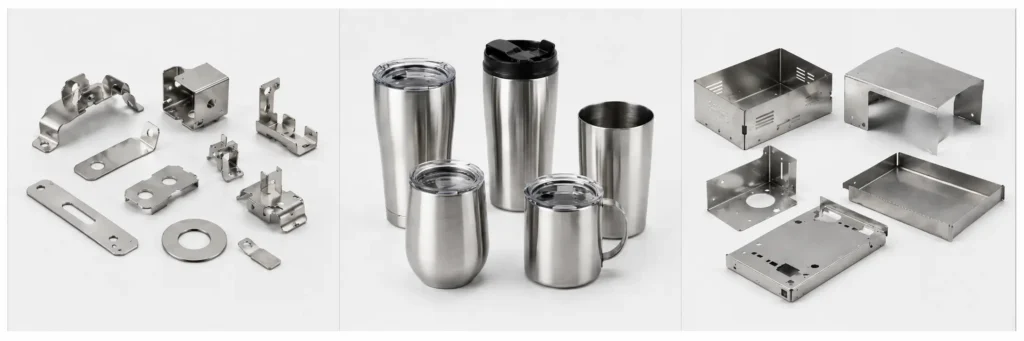
That balance explains why it is widely used for: Sheet metal enclosures, equipment covers, stamped brackets, kitchen equipment, electrical housings, automotive components and general industrial parts.
From a manufacturing perspective, 304 is particularly suitable for laser cutting, punching, stamping, deep drawing, bending and welding.
For many indoor or moderately corrosive applications, moving from 304 to 316 may provide little practical benefit while increasing raw material cost. This is why 304 is often the starting point when engineers evaluate stainless steel for a new product.
4. What Makes 316 Different?
The most important difference between 304 and 316 is not simply “quality.”
It is molybdenum. 316 typically contains approximately 2–3% molybdenum, which improves resistance to localized corrosion, especially pitting and crevice corrosion in chloride-containing environments.
This becomes important when parts are exposed to: Salt spray, coastal air, seawater, certain chemicals, aggressive cleaning agents or other chloride-containing environments.
For this reason, 316 is widely selected for marine equipment, chemical processing equipment, pharmaceutical equipment and components used in demanding outdoor environments.
However, this does not mean that 316 should automatically replace 304. If the product operates indoors and is not exposed to aggressive corrosion, 304 often provides the better balance between performance and manufacturing cost.
5. 304 vs 316 in Sheet Metal and Stamping
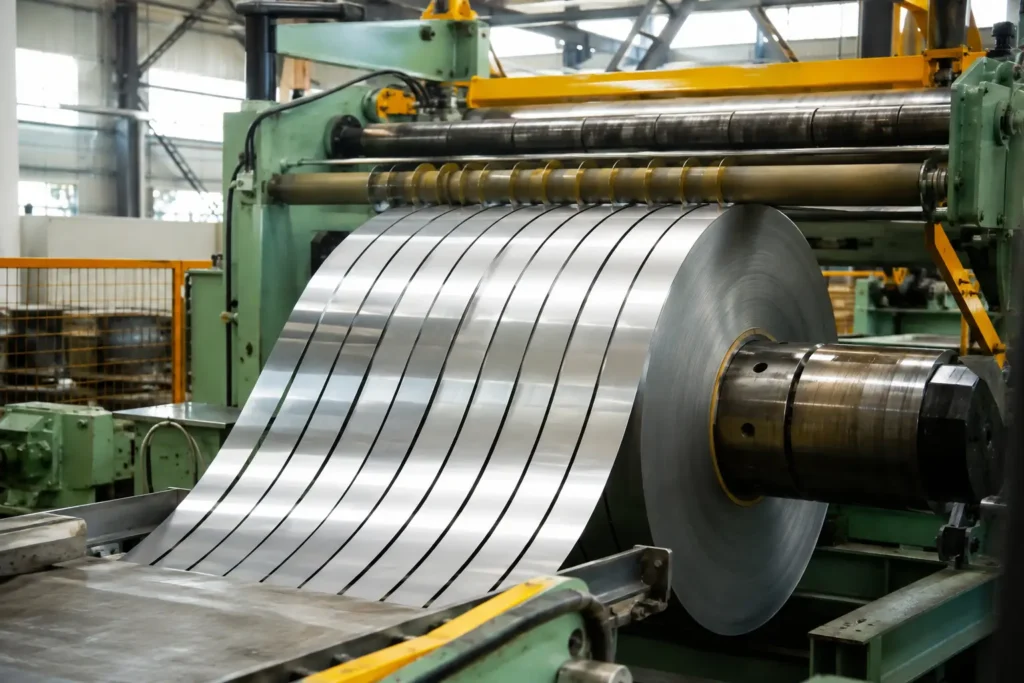
For a metal fabricator, material selection affects more than corrosion resistance. Both 304 and 316 are austenitic stainless steels and can be successfully processed by stamping, bending, laser cutting and welding. Both also work-harden during forming, so tooling condition, lubrication, bend design and process control become important in high-volume production.
| Comparison Item | 304 Stainless Steel | 316 Stainless Steel |
|---|---|---|
| Sheet Metal Fabrication | Excellent for laser cutting, punching, bending and welding | Also suitable, but material cost is higher |
| Stamping Performance | Excellent formability and widely used for stamped parts | Good formability, but slightly higher forming resistance may be encountered |
| Deep Drawing | Very commonly used for drawn and formed parts | Suitable for deep drawing when higher corrosion resistance is required |
| Work Hardening | Significant; tooling and forming process must be controlled | Significant; process control is equally important |
| Corrosion Resistance | Very good for indoor and general industrial environments | Better for chloride, coastal and chemically aggressive environments |
| Weldability | Excellent | Excellent |
| Material Availability | Very widely available | Widely available, but generally less common than 304 |
| Material Cost | Lower | Higher |
| Typical Applications | Brackets, housings, panels, covers, enclosures and stamped components | Marine parts, chemical equipment, outdoor components and corrosive-environment parts |
| Best Selection Scenario | General-purpose sheet metal and stamping | Applications where corrosion resistance is more important than material cost |
For most general sheet metal and stamping projects, 304 is usually the first choice because it offers a strong balance of formability, corrosion resistance and cost. 316 should be selected when the finished part will face salt spray, coastal conditions, chlorides or more aggressive chemical exposure.
6. One Common Purchasing Mistake: Specifying Only “18-8”
For commodity fasteners, the term 18-8 is widely used and may be sufficient depending on the application. For custom stamped or sheet metal components, however, it can create unnecessary uncertainty.
Consider a drawing that states: Material: 18-8 Stainless Steel. A supplier may still need clarification regarding the actual grade, required material certificate, mechanical properties and governing standard.
A clearer specification would be something such as: Material: Stainless Steel 304 / UNS S30400
or Material: Stainless Steel 316L / UNS S31603.
The exact specification should of course follow the applicable product and material standard. For production parts, a defined grade is much easier to purchase, inspect and trace than a general composition description.
7. How to Choose Between Them
The selection does not need to be complicated.
Choose 304 stainless steel when the component needs good corrosion resistance, good forming performance and competitive cost in normal industrial or indoor environments.
Choose 316 stainless steel when chloride exposure, marine conditions or aggressive chemicals create a meaningful corrosion risk.
Treat 18-8 stainless steel primarily as a general material description rather than automatically assuming it is a specific grade.
For engineered parts, the safest approach is: Define the actual grade first, then evaluate corrosion environment, forming requirements, welding conditions and total product cost.
FAQ
Not exactly. 304 is commonly considered an 18-8 stainless steel because of its chromium and nickel content, but 18-8 is a general description rather than one specific standardized grade.
316 provides better resistance to chloride-related corrosion because it contains molybdenum. However, for normal indoor or mildly corrosive applications, 304 can be the more economical choice.
304 is one of the most commonly used materials for sheet metal fabrication because it combines good corrosion resistance, formability, weldability and cost efficiency.
316 is generally preferred over 304 where components are exposed to salt spray, coastal environments or chloride-containing conditions.
304 stainless steel is primarily non-magnetic. However, machining, stamping, or deep drawing can induce martensitic transformation. You can test this with a magnet-sheets and formed parts may attract slightly, but bar stock often won’t.
316 stainless steel is also non-magnetic in the annealed state, and it’s even more stable against magnetism than 304.