1. 100W Fiber Laser Marking for Metal Parts – New In-House Capability
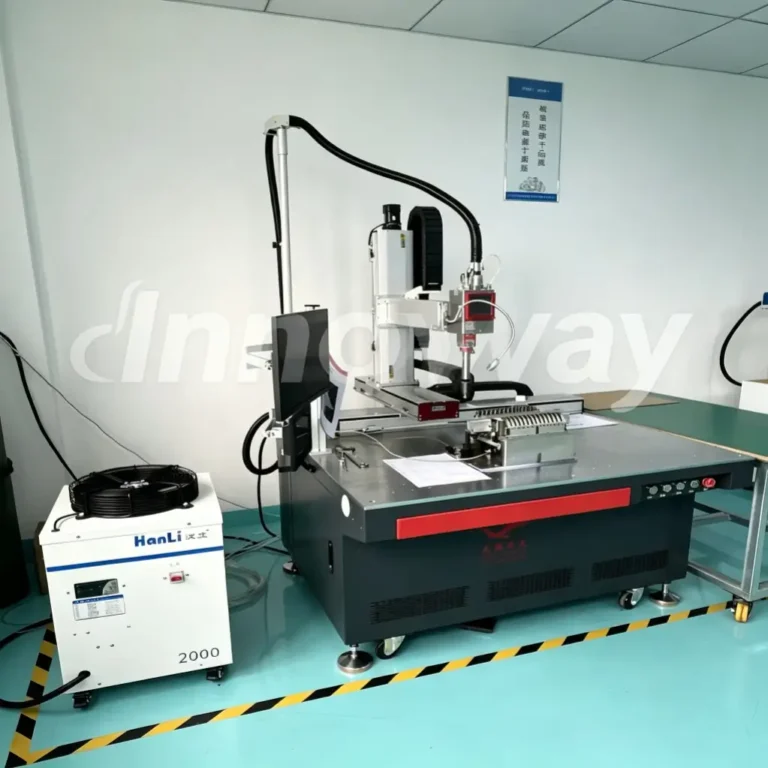
Innoway Precision has added two 100W fiber laser marking machines to strengthen our in-house metal marking, laser engraving and product traceability capabilities.
For customers sourcing custom sheet metal parts, stamped components and CNC machined parts, laser marking is often the final but critical step before assembly or shipment. Bringing this process in-house allows us to better control marking quality, production schedules and batch consistency.
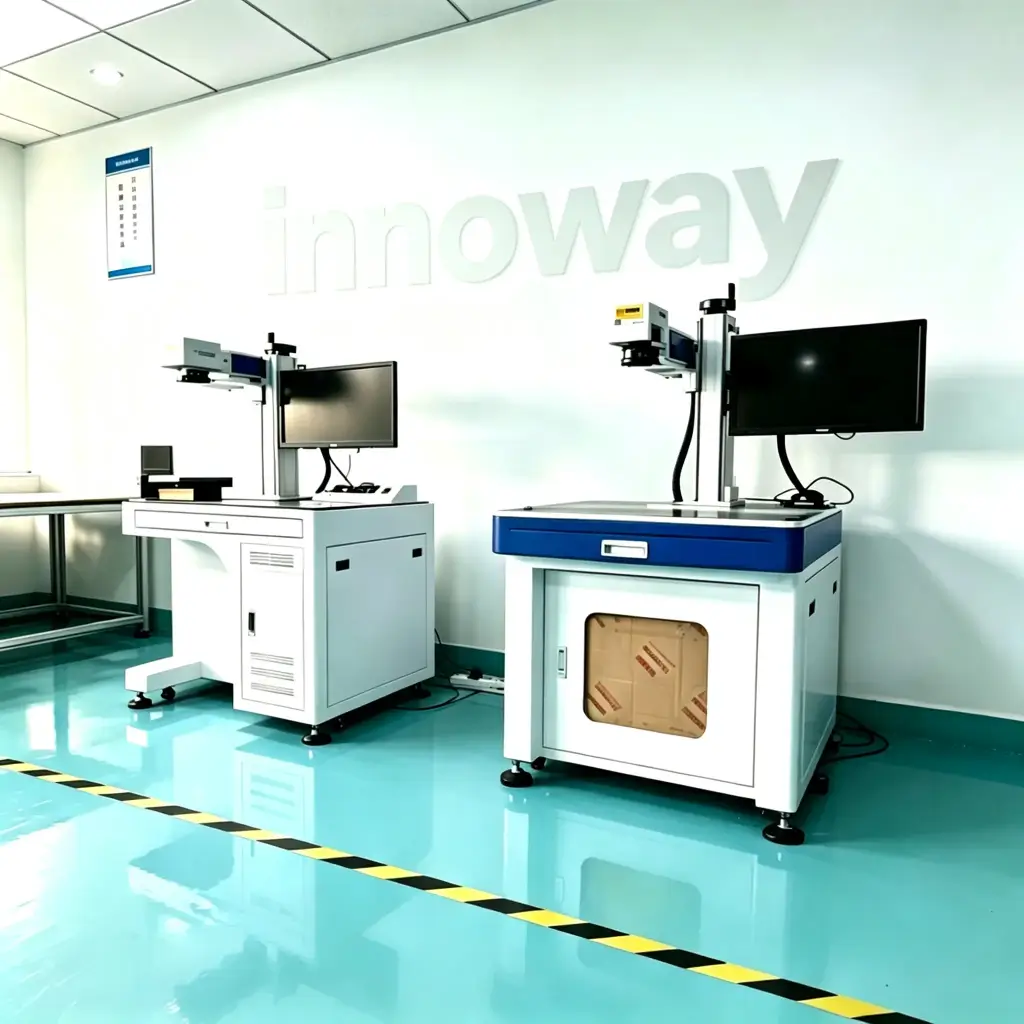
2. What Can Our 100W Fiber Laser Marking Machines Do?
Fiber laser marking is widely used for permanent identification on industrial metal components. Depending on the material, surface finish and marking requirements, we can produce:
- Company logos and product branding
- QR codes and barcodes
- Serial numbers and batch numbers
- Part numbers and product models
- Warning symbols and assembly marks
- Measurement scales and directional markings
- Traceability codes for OEM components
- Selective removal of coatings or anodized layers
Compared with labels or conventional ink printing, laser marking creates a permanent identification directly on the component without requiring additional labels or printing consumables.
3. Why In-House Laser Marking Matters
Outsourcing laser marking adds another supplier and another production step. This can increase transportation, communication and scheduling requirements, especially when markings vary between product models or production batches.
This allows us to manage more of the manufacturing process under one quality system and respond more quickly when customers require changes to logos, serial numbers, QR codes or marking positions.
The two 100W machines also provide additional capacity for both prototype development and repeat production orders.
4. Typical Applications
Our metal laser marking capability is suitable for components used in:
Automotive systems, industrial equipment, electronics, computer hardware, communication equipment, new energy products, machinery and precision metal assemblies.
Whether the requirement is a simple part number or a complete traceability code, our engineering team evaluates the material, surface treatment, marking position and required contrast before production.
5. From Metal Fabrication to Final Marking
Adding two 100W fiber laser marking machines is part of Innoway Precision’s continued investment in integrated manufacturing capability.
Rather than providing laser marking as a standalone service, our goal is to combine it with precision stamping, sheet metal fabrication, CNC machining, surface finishing and assembly to provide customers with a more complete custom metal parts manufacturing solution.
If your project requires custom metal parts with logos, QR codes, serial numbers, traceability marking or selective coating removal, send us your drawing for review.
Innoway Precision
Custom Metal Stamping | Sheet Metal Fabrication | CNC Machining | Laser Marking
Frequently Asked Questions
Fiber laser marking is suitable for many metals, including stainless steel, carbon steel, aluminum, anodized aluminum, brass and copper. The final marking appearance depends on the material grade, surface finish and laser parameters.
Yes. Fiber lasers can produce clear markings on anodized aluminum. Depending on the process, the laser can remove the anodized layer to expose the base aluminum underneath or create other marking effects according to the surface and laser configuration.
Laser marking generally creates identification or contrast on the surface, while laser engraving removes material and produces measurable depth. The appropriate process depends on the required durability, appearance and drawing specifications.
Yes. QR codes, barcodes, serial numbers, batch numbers and part numbers are common industrial fiber laser marking applications. Permanent marking is especially useful for product identification and manufacturing traceability.
Yes, depending on the coating and required result. For example, laser processing can selectively remove an anodized or coated surface to create contrasting identification or expose a specified area of the underlying metal. The process should be verified according to the drawing and surface-treatment specification.
Our 100W fiber laser marking machine can achieve a maximum engraving depth of approximately 1–2 mm, depending on the material, engraving area, laser parameters and required surface quality.
The maximum single marking area is 220 × 220 mm. Larger workpieces can also be processed as long as the required marking position can be properly located within the machine’s working area.