1. Small Parts Require Precise Quality Control
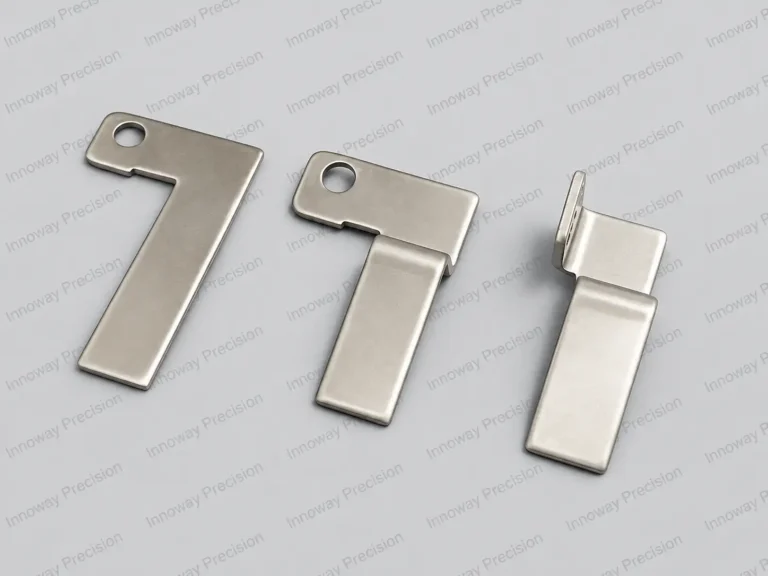
We recently completed a batch of miniature flat stamped metal strips for a customer’s adhesive dispensing and assembly process. Although these components are very small, they require strict control of burrs, flatness, electroplated surface quality and cleanliness.
The finished parts must remain flat, free from visible burrs and clean after electroplating. Their surfaces are also required to pass a 34 dyne pen test, as oil, dust or processing residue may affect adhesive wetting, dispensing consistency and final bonding performances.
2. Stamping, Grinding, Electroplating and Final Inspection
The production route for this project includes:
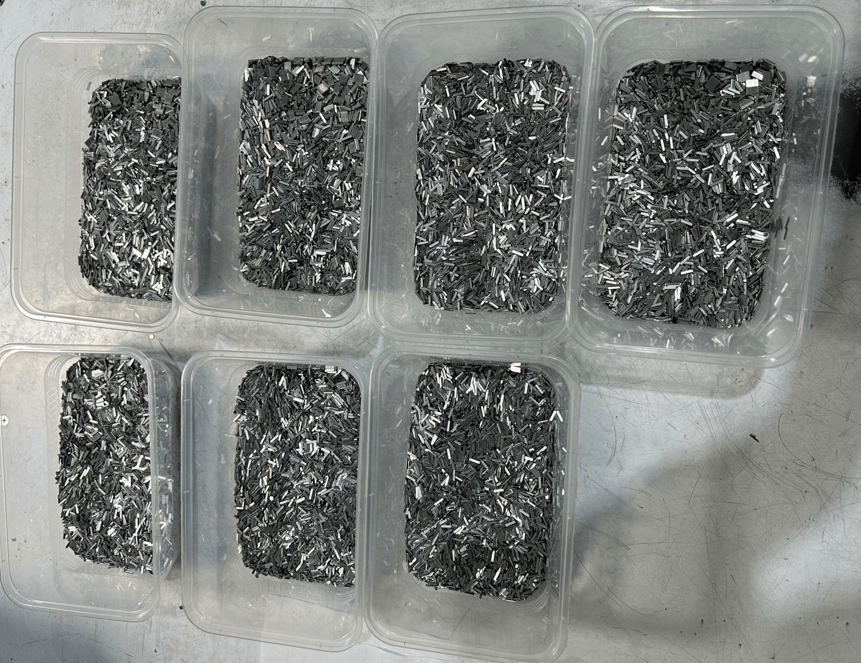
Stamping → Grinding → Electroplating → 100% Inspection → Packaging and Shipment
During the stamping process, the basic profile and functional features of the component are formed. Die clearance, cutting-edge condition, material feeding and press stability must be properly controlled to reduce burrs, dimensional variation and part deformation.
After stamping, the parts undergo grinding to remove small burrs and sharp edges. The grinding process must be carefully controlled because excessive processing may change the component dimensions, round the edges or affect part flatness.
The parts are then electroplated according to the customer’s surface requirements. The plating must be uniform and free from obvious stains, peeling, blistering, scratches, unplated areas or abnormal colour differences.
Each production stage affects the final performance of the component. A visually acceptable part may still create assembly problems if its flatness, surface condition or edge quality is not properly controlled.
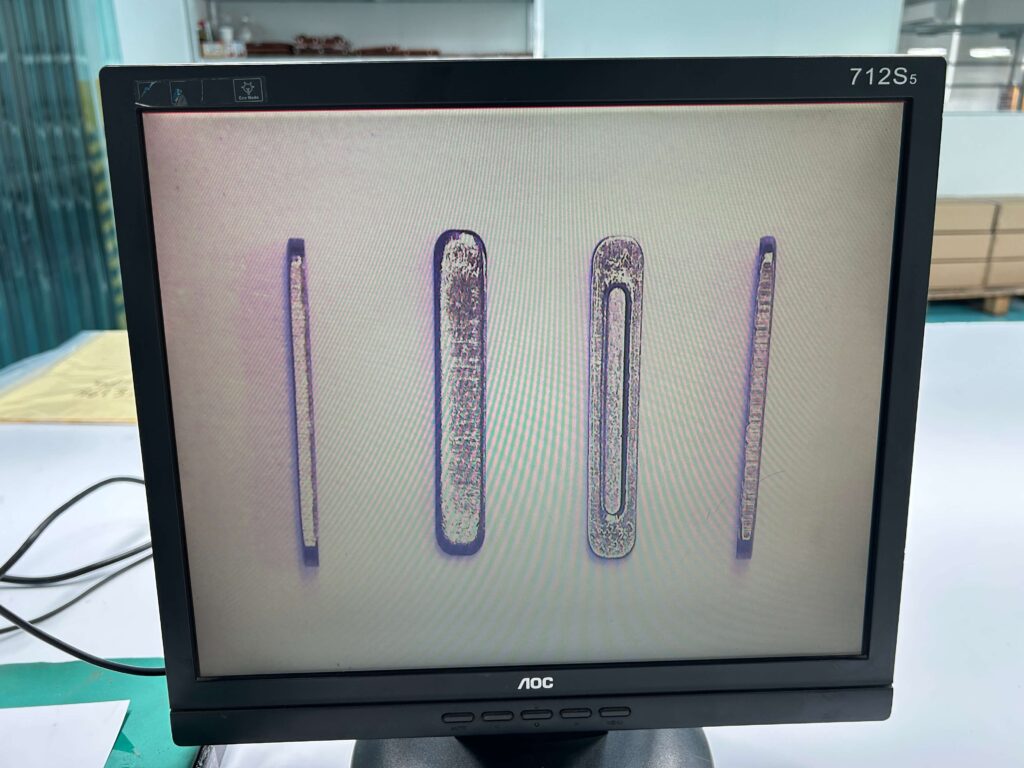
3. 100% Inspection Before Shipment
After electroplating, every part is inspected before packaging and shipment. The main inspection items include:
- No visible burrs or sharp edges
- No obvious warping, bending or deformation
- Clean and uniform electroplated surface
- No stains, scratches, peeling or exposed base material
- Critical dimensions conforming to the drawing
- Consistent appearance across the production batch
- Surface condition suitable for adhesive dispensing
- Compliance with the required 34 dyne test
The dyne pen test is used to evaluate the wettability and surface energy of the metal surface. When the 34 dyne test liquid forms a continuous film for the specified observation time without quickly shrinking or forming droplets, the surface meets the required test level.
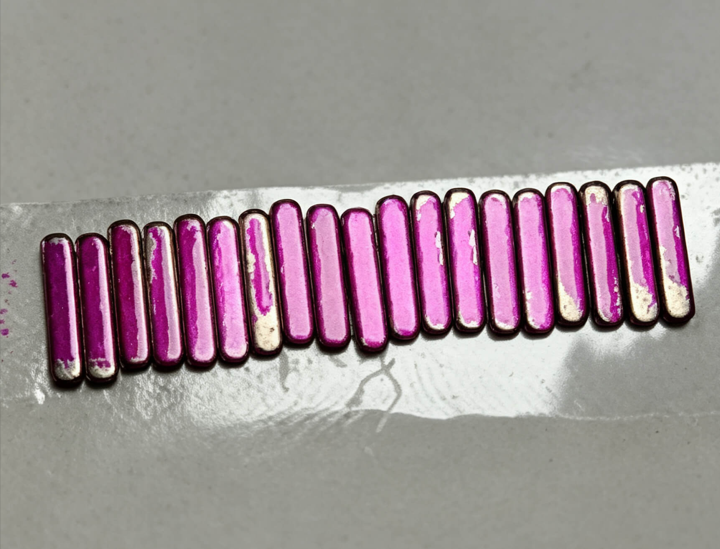
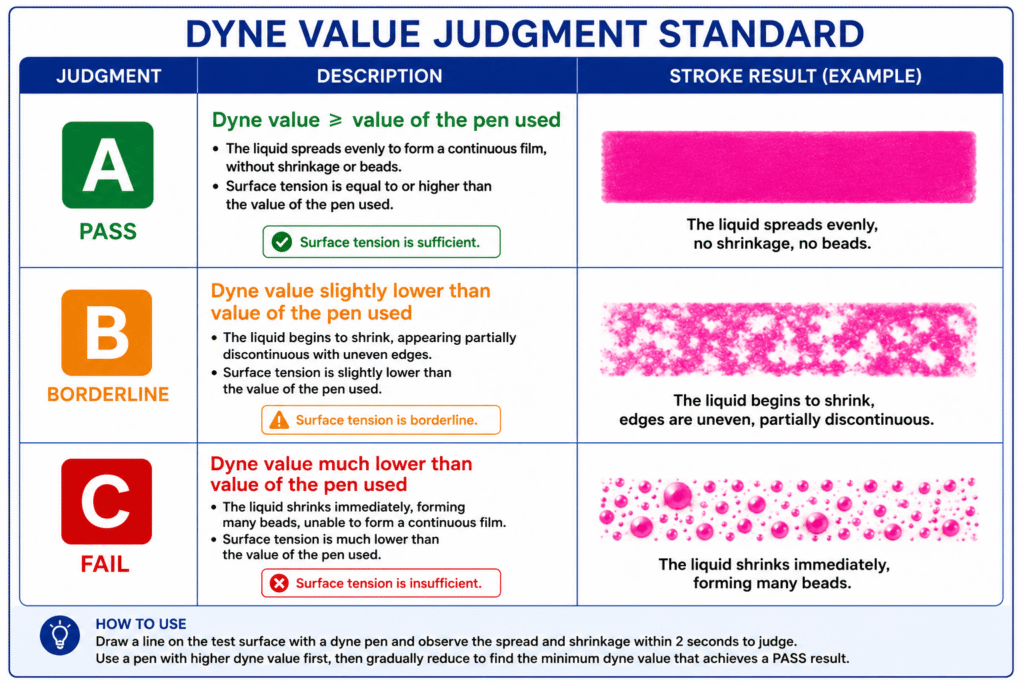
This test helps identify possible contamination or insufficient surface preparation that could affect adhesive wetting. However, it should be used together with controlled cleaning, visual inspection and the customer’s actual adhesive validation process.
4. Quality Control Based on the Customer’s Assembly Process
The quality of precision stamped parts should not be evaluated only by their drawing dimensions. The components must also function reliably during the customer’s assembly, positioning and adhesive dispensing operations.
Through controlled stamping, burr removal, electroplating, surface cleanliness management and 100% final inspection, we help reduce risks such as:
- Incorrect part positioning
- Poor contact between mating surfaces
- Uneven adhesive spreading
- Insufficient adhesive coverage
- Weak bonding or local delamination
- Interruptions to automated assembly
We provide custom precision metal stamping, grinding, electroplating, surface cleanliness control and full inspection services according to customers’ drawings and assembly requirements.
▶ Video: Precision stamped parts after electroplating and final inspection
Send us your 2D drawings, 3D models or samples for a manufacturing review.
FAQ
Grinding removes small stamping burrs and sharp edges that may affect assembly, damage other components or interfere with adhesive dispensing.
Electroplating may introduce defects such as stains, scratches, blistering, peeling, colour variation or unplated areas, so each part must be checked before shipment.
A 34 dyne test evaluates the surface energy and wettability of the part, helping determine whether the surface condition is suitable for subsequent adhesive application.
Yes. Oil, dust, cleaning residue and other contaminants may cause the adhesive to shrink, spread unevenly or develop insufficient bonding strength.
Stable die conditions, suitable stamping clearance, controlled grinding, careful handling and final inspection are combined to reduce burrs, distortion and surface damage.