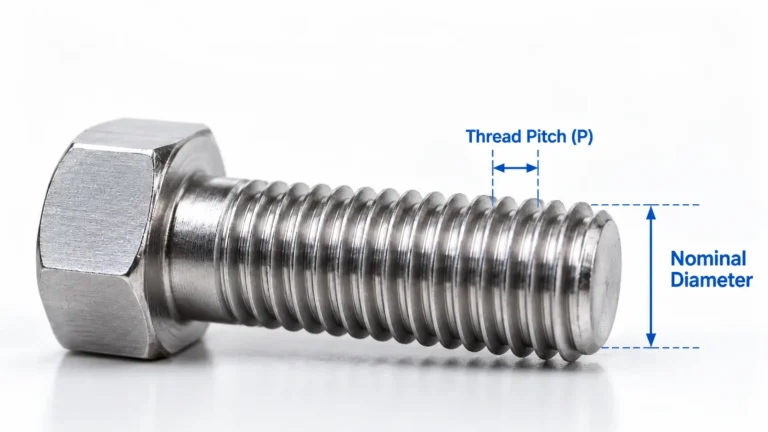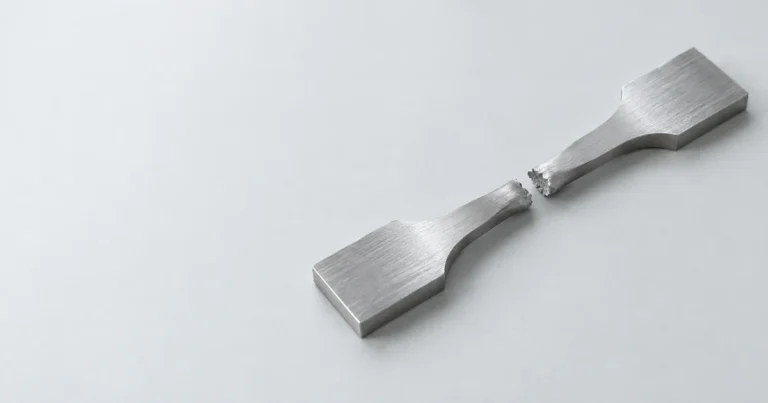
1. Why Heat Treatment Determines Metal Performance
Why can two metal parts made from similar materials perform very differently? One may wear, bend or crack quickly, while another withstands repeated loads for years. In addition to material selection and structural design, metal heat treatment often plays a decisive role in final component performance.
Heat treatment does not simply mean “making metal harder.” The correct process must balance hardness, strength, toughness, wear resistance and dimensional stability according to the part’s actual working conditions.
2. What Is Metal Heat Treatment?
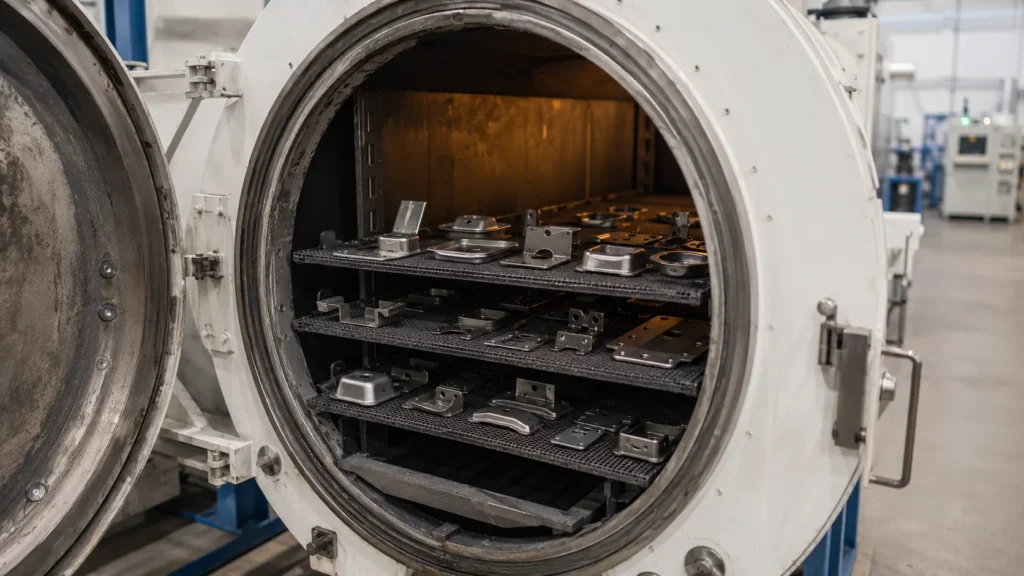
Metal heat treatment is a controlled manufacturing process in which a material or component is heated, held at a specified temperature and cooled under defined conditions. This changes its microstructure and mechanical properties without significantly changing its basic shape.
Conventional heat treatment mainly changes the internal structure of the material. Thermochemical processes such as carburizing and nitriding also change the chemical composition of the component’s surface layer.
Heat treatment can be used to:
- Increase hardness, strength and wear resistance.
- Improve toughness and reduce brittle failure.
- Soften material for stamping, forming or machining.
- Reduce residual stress caused by welding, stamping or CNC machining.
- Improve dimensional stability and component service life.
- Produce a hard surface while maintaining a tougher core.
Material grade, part thickness, geometry, furnace loading, treatment temperature and cooling rate can all affect the final result.
3. Common Metal Heat Treatment Processes
| Process | Main purpose | Typical applications |
|---|---|---|
| Annealing | Reduces hardness, improves ductility and machinability, and relieves internal stress | Cold-formed parts, welded components and materials requiring further machining |
| Normalizing | Refines grain structure and produces more uniform mechanical properties | Carbon steel forgings, castings and structural parts |
| Quenching | Rapidly cools a hardenable alloy to increase hardness and strength | Tools, dies, shafts and wear-resistant components |
| Tempering | Reduces quenching stress and brittleness while adjusting hardness and toughness | Normally performed after quenching |
| Quenching and tempering | Produces a balanced combination of strength, hardness and toughness | Shafts, gears, bolts and load-bearing components |
| Stress relieving | Reduces residual stress from welding, forming or machining | Welded sheet metal assemblies and precision CNC parts |
| Solution treatment and aging | Strengthens suitable alloys through controlled solution and precipitation processes | Heat-treatable aluminium and precipitation-hardening stainless steel |
| Surface hardening | Hardens a selected surface area while retaining a tougher core | Shafts, guide rails, gears and pins |
| Carburizing or nitriding | Produces a hard, wear-resistant surface layer with a tougher core | Gears, transmission parts, wear pins and precision shafts |
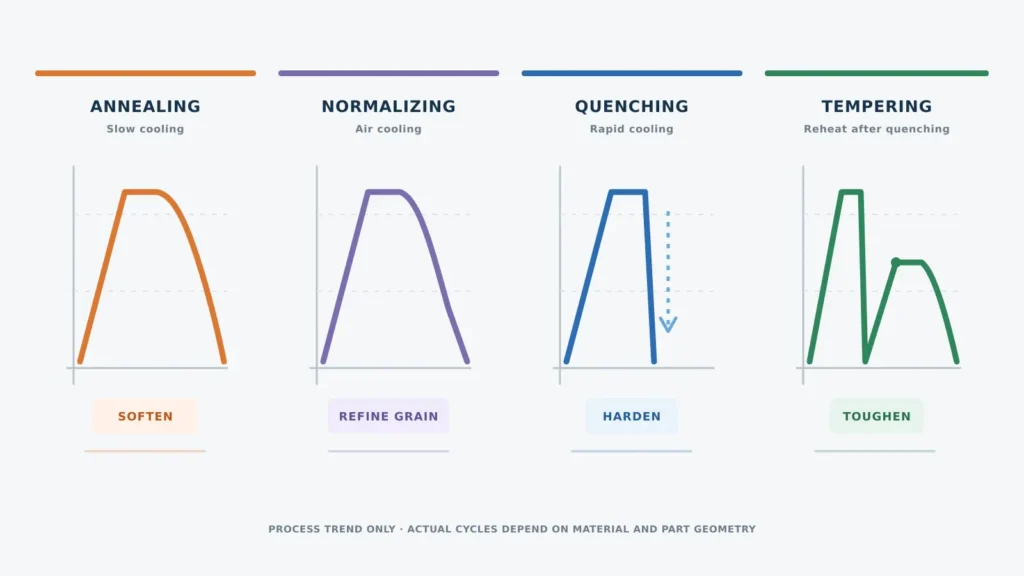
Quenching and tempering are closely related. A quenched steel component may achieve high hardness but also contain high residual stress and increased brittleness. Tempering is therefore normally performed soon after quenching to reduce cracking risk and obtain the required mechanical balance.
4. Important Material Differences
Not every metal can be hardened using the same heat treatment process.
- Low-carbon steels such as SPCC cannot normally achieve high through-hardness through conventional quenching alone. A different steel grade or a surface-hardening process may be required.
- Austenitic stainless steels such as SUS304 and SUS316L cannot be hardened through conventional quenching and tempering.
- AL5052 is a non-heat-treatable aluminium alloy and is mainly strengthened through work hardening.
- AL6061 is a heat-treatable aluminium alloy that can be strengthened through solution treatment and aging.
A drawing that only states “heat treatment required” does not provide enough information for production. The material grade and final performance requirements must also be specified.
5. Common Heat Treatment Problems and Quality Control
Thin stamped parts, welded sheet metal assemblies and precision CNC components can be sensitive to temperature changes. An unsuitable process may cause distortion, cracking, oxidation or dimensional failure.
| Common problem | Possible causes | Recommended controls |
|---|---|---|
| Warping or distortion | Uneven wall thickness, asymmetrical geometry or non-uniform cooling | Optimise furnace loading and fixturing, reserve finishing allowance and inspect critical dimensions after treatment |
| Heat treatment cracks | Sharp corners, sudden section changes, severe quenching or incorrect material selection | Improve corner radii and section transitions, select a suitable quenching method and temper promptly |
| Oxidation or decarburisation | Insufficient atmospheric protection at high temperature | Use vacuum or protective-atmosphere treatment and control surface machining allowance |
| Uneven hardness | Overloaded furnace, insufficient soaking, mixed materials or inconsistent cooling | Maintain material traceability, monitor furnace uniformity and inspect hardness by batch |
| High hardness but poor toughness | Excessive hardness target or inadequate tempering | Rebalance hardness, strength and toughness requirements |
Typical inspection items include: Rockwell, Vickers or Brinell hardness, Surface and core hardness, Effective case depth, Metallographic structure, Dimensional change and distortion, Oxidation and decarburisation, Surface or internal cracks, Furnace batch and process records.
ISO 20431:2023 provides a general framework for heat treatment quality control and references recognised metallic hardness testing methods. View ISO 20431:2023
6. How to Specify Heat Treatment on Drawings and RFQs
A drawing or request for quotation should include the following information:
- Exact material grade and initial material condition.
- Required heat treatment process or final performance objective.
- Hardness range and measurement scale, such as HRC, HV or HB.
- Surface and core hardness where applicable.
- Hardness testing location.
- Effective case depth for carburized or nitrided parts.
- Critical dimensions and permitted distortion.
- Areas that must be protected from heat treatment.
- Post-treatment machining or grinding requirements.
- Inspection method, sampling level and certification requirements.
A typical drawing note may be written as:
Material: 40Cr
Heat treatment: Quenched and tempered
Final hardness: 28–32 HRC
Heat treat after rough machining; finish critical dimensions after heat treatment
For precision stamped, sheet metal or CNC machined parts, heat treatment should be considered during the DFM stage. Material selection, distortion risk, finishing allowance and surface treatment sequence should be planned before production begins.
FAQ
Metal heat treatment is the controlled heating, holding and cooling of a metal to change its microstructure and achieve the required mechanical properties.
Annealing primarily softens the material, normalizing refines and uniformises the structure, quenching increases hardness, and tempering reduces quenching brittleness while balancing hardness and toughness.
Quenched steel can contain high residual stress and may be excessively brittle. Tempering reduces these risks and improves toughness and dimensional stability.
Yes. Thermal expansion, cooling contraction and microstructural transformation can cause dimensional changes, which is why precision parts often require finishing allowance and post-treatment inspection.
Yes, but the process depends on the exact alloy. For example, SUS304 cannot be hardened through conventional heat treatment, AL5052 is non-heat-treatable, and AL6061 can be strengthened through solution treatment and aging.
No. Excessive hardness can increase brittle failure risk. Service life also depends on toughness, case depth, residual stress, surface condition, component geometry and actual loading.