1. Project Overview
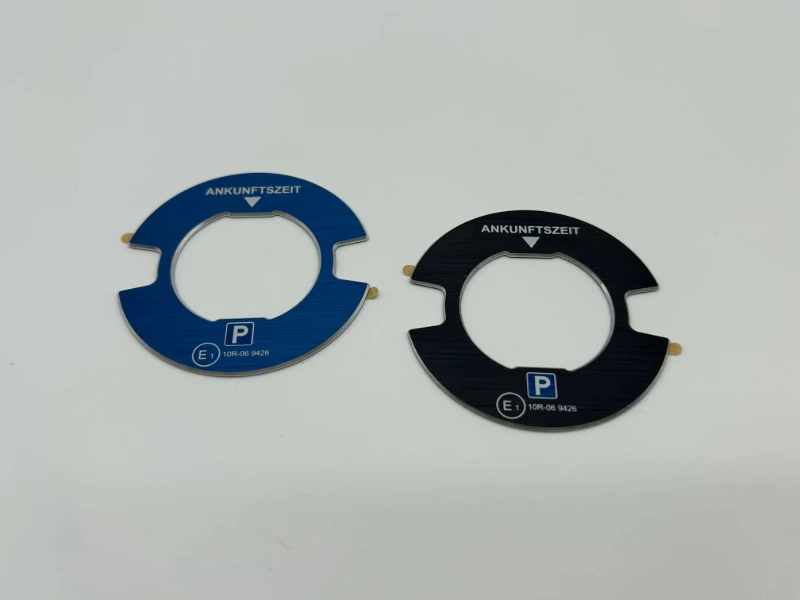
This aluminum decorative ring was developed for a European parking disc timer application. Although the component is relatively small, the customer required high consistency in appearance, surface finish, and assembly performance during mass production.
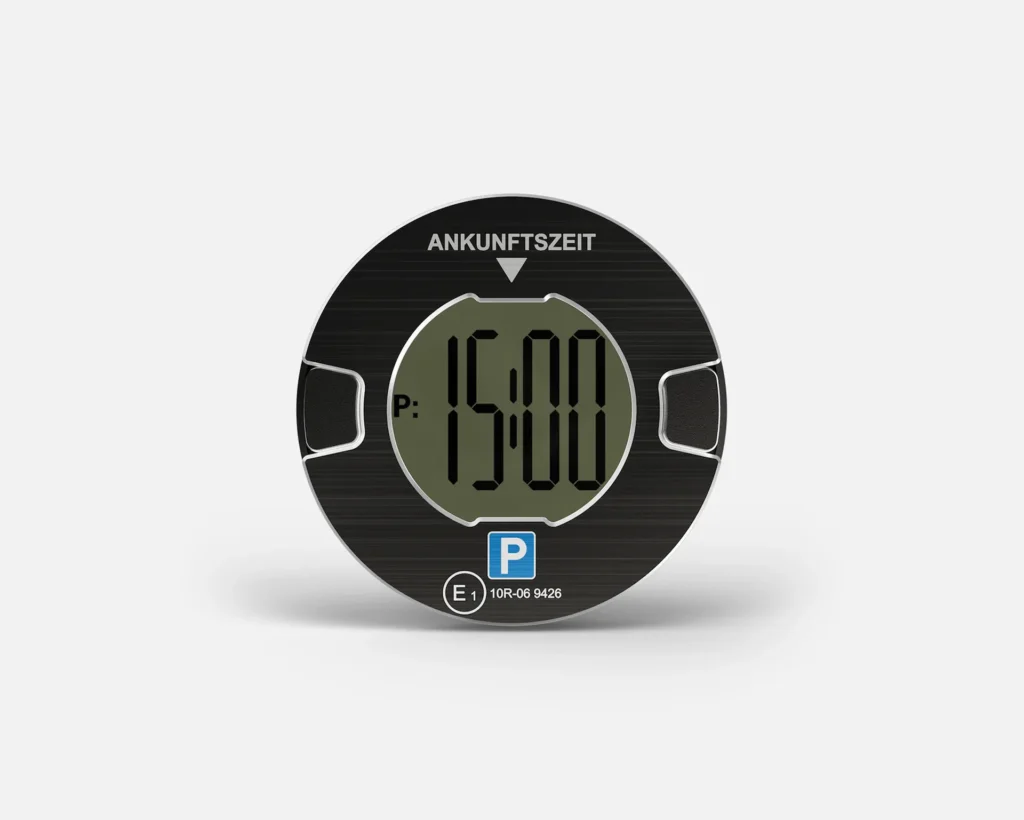
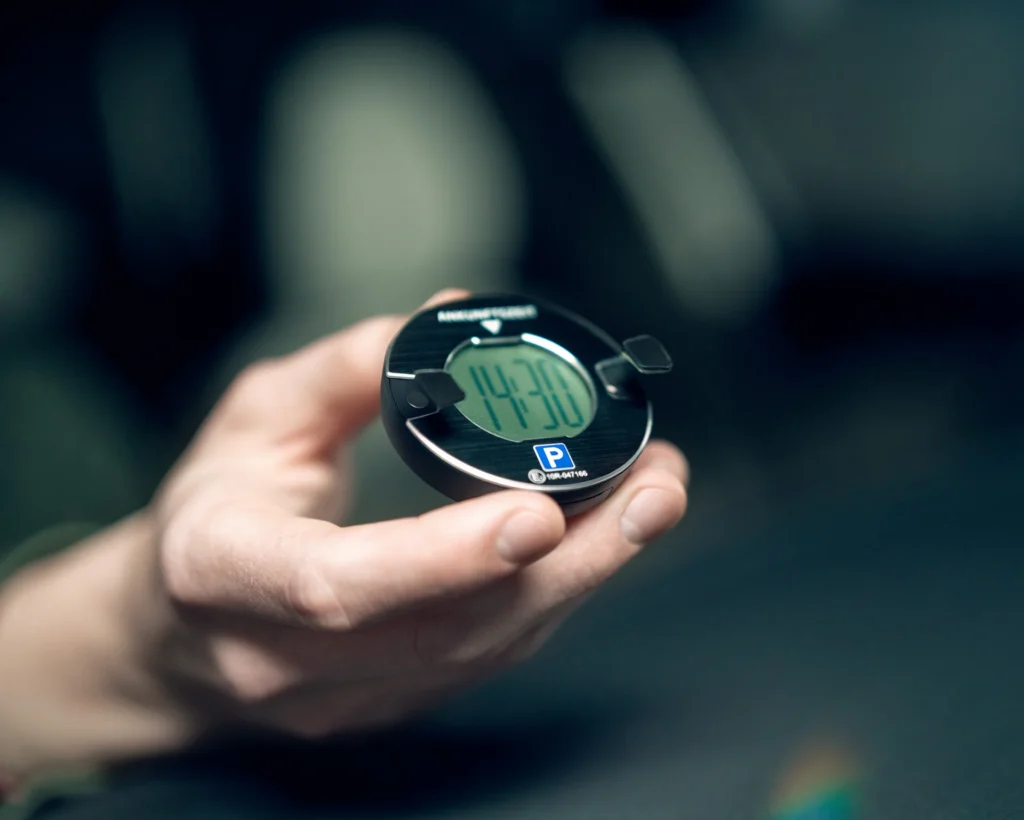
As the product is exposed to different environmental conditions during vehicle use, the customer also required UV aging testing to verify color stability and weather resistance of the anodized surface treatment.
Through process optimization and strict quality control, Innoway successfully delivered 500,000+ pieces in mass production, providing a stable and reliable metal component solution for the customer.
2. Customer Requirements and Manufacturing Challenges
For this project, the customer was looking for more than just a metal stamping supplier. The decorative ring needed to achieve:
- Consistent anodized colors between production batches
- Premium brushed aluminum appearance
- Smooth and safe edge finishing
- Clear and durable printed markings
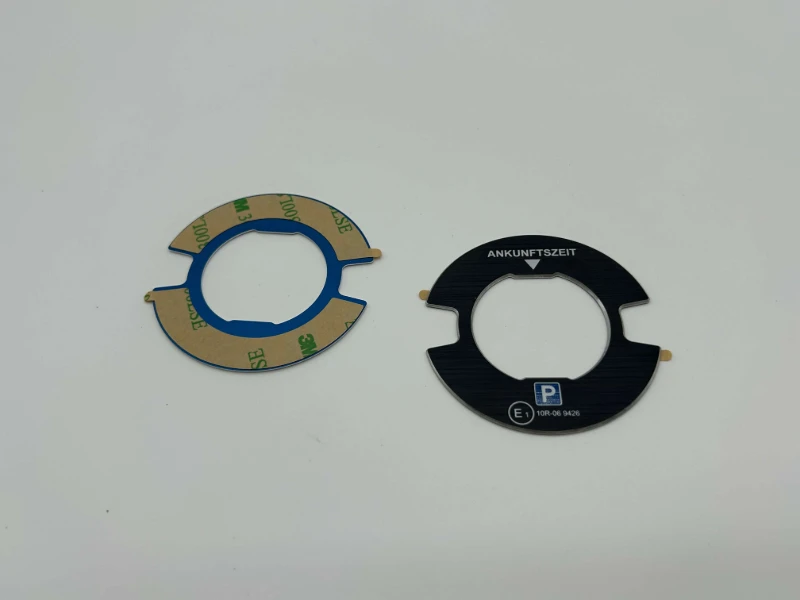
- Reliable 3M adhesive bonding performance
- UV resistance verification to ensure long-term color durability
- Stable quality during high-volume production
The biggest challenge was maintaining the same appearance and performance from the first piece to the 500,000th piece.
For decorative metal parts, small variations in material surface, machining quality, anodizing parameters, or printing position can directly affect the final product appearance.
3. Complete Manufacturing Process
To ensure product quality and production stability, Innoway developed a complete manufacturing process:
3.1 Aluminum Strip Cutting
The production starts with aluminum material preparation. The aluminum sheet is precisely slit into suitable strip widths according to product requirements, ensuring stable material feeding during stamping. This process helps improve material utilization and maintain consistency during mass production.
3.2 Precision Stamping
After material preparation, the aluminum strips are processed through precision stamping. The stamping process forms the basic geometry of the decorative ring while maintaining dimensional accuracy and production efficiency. Proper tooling design and process control are essential to avoid deformation and ensure consistent product shape.
3.3 Anodizing Surface Treatment
After stamping, the aluminum parts undergo anodizing treatment to achieve the required appearance and durability. The anodizing process provides:
- Enhanced corrosion resistance
- Improved surface hardness
- Premium metallic appearance
- Custom color options
- Better environmental durability
To ensure long-term performance, the anodized samples were tested through UV aging testing, verifying that the color remained stable under prolonged ultraviolet exposure.
This additional validation helped ensure the decorative ring could maintain its premium appearance during real vehicle usage.
3.4 CNC Precision Edge Milling and Chamfering
Although stamping provides efficient forming, the edge quality required further improvement. The stamped parts were processed with CNC precision milling to achieve:
- Smooth edge finishing
- Controlled chamfer dimensions
- Improved safety and hand feeling
- Higher-end appearance
This secondary machining process significantly improves the visual and tactile quality of the component.
3.5 Silk Screen Printing
The product markings are applied through high-precision silk screen printing. The process ensures:
- Clear graphics
- Accurate positioning
- Long-lasting appearance
- Stable printing quality
Printing consistency is especially important for automotive-related products where appearance requirements are strict.
3.6 “3M Adhesive Application”
The final production step is 3M adhesive backing application. The adhesive is precisely positioned and applied to ensure:
- Easy installation
- Strong bonding performance
- Clean appearance after assembly
This allows customers to directly install the finished decorative ring onto the parking timer product.
3.7 Mass Production Capability
Producing a prototype is only the first step. The real challenge is achieving stable quality during large-scale manufacturing. For this project, Innoway completed: 500,000+ pieces mass production delivery with consistent:
✔ Product dimensions
✔ Surface appearance
✔ Anodizing color
✔ Printing quality
✔ Adhesive application
Through optimized production flow and quality control, the customer achieved reliable supply for long-term product delivery.
4. Why Choose Innoway for Custom Aluminum Components?
With experience in precision metal manufacturing, Innoway provides integrated production capabilities including:
- Precision stamping
- CNC machining
- Aluminum processing
- Surface finishing
- Silk screen printing
- Adhesive application
- Quality inspection
- Mass production support
From initial design review to stable volume production, we help customers reduce supplier coordination and improve product reliability.
5. Conclusion
A small decorative metal component requires careful control throughout every manufacturing stage. From aluminum strip cutting, precision stamping, anodizing, CNC edge finishing, silk screen printing, to 3M adhesive application, every process contributes to the final product quality.
This parking disc timer decorative ring project demonstrates Innoway’s ability to deliver high-quality custom aluminum components with stable mass production capability.
FAQ
The decorative ring is manufactured from aluminum, providing lightweight performance, corrosion resistance, and excellent surface finishing capability.
Common options include anodizing, brushing, sandblasting, CNC finishing, laser marking, and silk screen printing.
Yes. We support customized anodizing colors based on customer requirements and appearance standards.
Innoway supports prototype development, small-batch production, and high-volume manufacturing. This project achieved more than 500,000 pieces mass production delivery.
Yes. Innoway provides integrated manufacturing services including stamping, CNC machining, surface treatment, printing, and adhesive application.
UV testing is used to verify the color stability and weather resistance of anodized aluminum parts. It helps ensure the surface color will not fade or change after long-term exposure to sunlight, especially for automotive and outdoor applications.