1. What Is UV Printing?
UV printing is a digital printing process that uses ultraviolet light to cure special UV ink almost immediately after it is printed onto a surface. The printer sprays the ink onto the material, and UV lamps cure the ink into a solid layer. This process can create colorful graphics, logos, text, patterns, and decorative effects on many types of products without traditional printing plates.
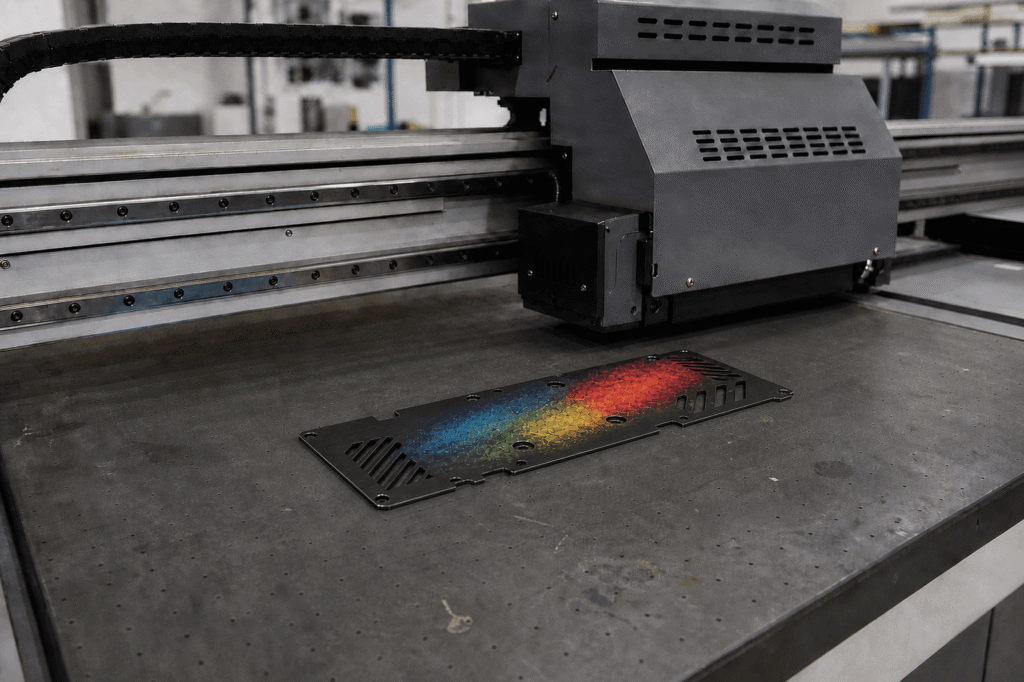
In simple terms, UV printing prints and cures at the same time. Because the ink dries quickly, the image can stay sharp and the production process can be faster than many traditional methods. UV printing is often used for custom products, packaging samples, signage, promotional gifts, product panels, display items, and short-run production where flexibility and fast turnaround matter.
2. How the UV Printing Process Works
A UV printer usually includes print heads, an ink supply system, a flatbed or roll platform, RIP software, and UV curing lamps. Before printing, the artwork is prepared in the correct size, resolution, and color mode. The printer then sprays UV ink onto the product surface, while the curing lamps harden the ink before it has time to spread or soak deeply into the material.
The final result depends on the printer accuracy, ink type, material surface, curing strength, print resolution, and operator setup. Some materials can be printed directly, while others may need cleaning, primer, plasma treatment, or surface preparation to improve adhesion. For high-value products, sample testing is recommended before mass production.
3. Materials Suitable for UV Printing
UV printing can be used on many materials, including acrylic, glass, metal, PVC, ABS, PC, wood, leather, ceramic, paperboard, aluminum composite panel, packaging boxes, display boards, and some rubber-like materials. It is especially useful for rigid sheets, flat parts, product panels, signs, and finished items that need colorful surface decoration.
However, not every material gives the same print quality or adhesion. Smooth, glossy, coated, oily, or flexible surfaces may require special preparation. Dark or transparent materials may also require white ink as a base layer so that the printed colors look bright and accurate.
4. Key Benefits of UV Printing
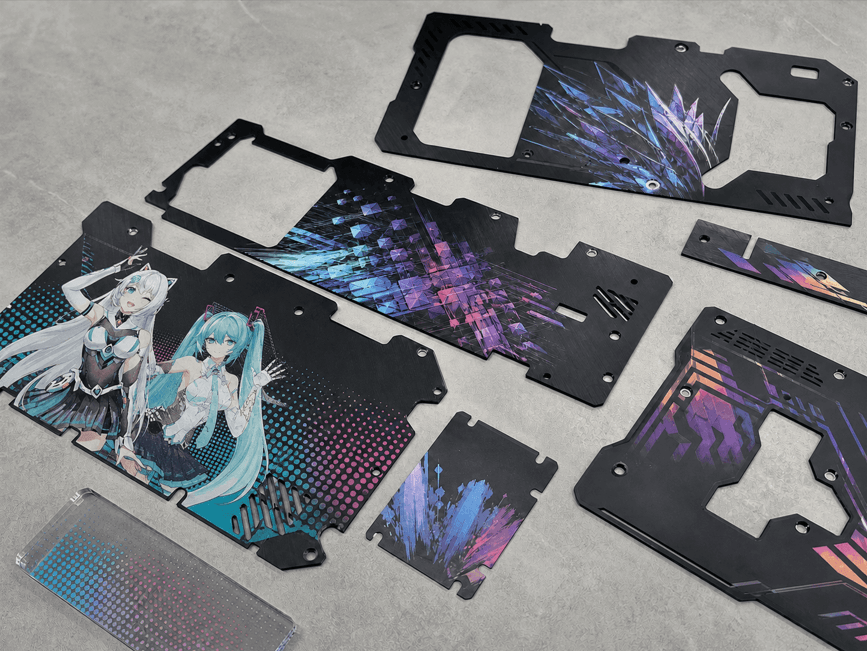
The main benefits of UV printing are fast setup, rich color, sharp detail, quick drying, and strong flexibility for short-run or multi-version orders. Since UV printing is digital, it usually does not require screen plates or mold-like preparation. Once the artwork is confirmed, the printer can produce a sample or small batch quickly.
UV printing can also support white ink, color ink, varnish, spot gloss, matte effects, and light raised texture. White ink helps images show clearly on transparent or dark materials. Varnish can improve local shine and surface feel, while layered printing can create a slight embossed effect for more visual depth.
5. UV Printing vs. Screen Printing
UV printing and screen printing can both decorate product surfaces, but they fit different order types. UV printing is better for full-color graphics, gradients, photos, short runs, personalized artwork, and fast sampling. Screen printing is often better for simple graphics, solid colors, larger quantities, and repeat orders with the same design.
Cost also works differently. Screen printing usually requires plate making and more setup, but the unit cost can be lower when the quantity is high. UV printing has less setup and is easier to change between designs, but a large full-surface print with heavy ink coverage can cost more. Buyers should compare design complexity, quantity, color requirements, material, and lead time before choosing.
| Comparison Point | UV Printing | Screen Printing |
|---|---|---|
| Best for | Full-color and short-run work | Simple designs and large runs |
| Setup | Usually faster | Usually needs screens or plates |
| Artwork changes | Easy to change | More setup for each version |
| Color style | Photos, gradients, detailed graphics | Solid colors and simple graphics |
| Cost advantage | Samples and multi-version orders | High-volume repeat orders |
6. Common Applications of UV Printing
UV printing is widely used for advertising signs, display stands, acrylic products, electronic housings, home appliance panels, gift customization, packaging boxes, metal plates, glass decoration, promotional products, industrial panels, and branded product surfaces. It is especially useful when a product needs full-color graphics, gradients, high-resolution logos, or personalized designs.
In purchasing projects, UV printing is often chosen for product samples, small-batch customization, seasonal designs, and multi-SKU production. For example, the same product can be printed with different graphics for different customers, markets, or campaigns without making new screen plates for every version.
7. Conclusion: When Is UV Printing a Good Choice?
UV printing is a good choice for projects that need colorful graphics, fast sampling, small-batch customization, multi-version production, and decorative product surfaces. It can print directly on many materials and can support white ink, color ink, varnish, and light texture effects.
For the best result, buyers should confirm the material, artwork, print area, color requirement, surface effect, testing standard, and sample approval process before mass production. For new materials or high-appearance products, sample testing is the safest way to control quality and reduce rework.
FAQ
UV printing can have good adhesion and durability when the material, ink, surface treatment, and curing settings are correct. However, durability depends on the product material and use environment, so abrasion and alcohol resistance tests are recommended for demanding applications.
Yes. White ink is a common UV printing option. It is often used on transparent, black, or dark-colored materials to make color graphics brighter and more accurate.
UV printing can support batch production, but it is especially suitable for short runs, medium quantities, multi-version orders, and customized products. For very large orders with simple artwork, screen printing may be more cost-effective.
AI, PDF, PSD, TIFF, and high-resolution PNG files are commonly used for UV printing. Vector files are preferred for logos and text, while high-resolution image files are better for photos or complex graphics.
Sample testing helps confirm color, position, image clarity, surface effect, and adhesion before the order moves into mass production. It reduces the risk of color mismatch, poor adhesion, or rework.
UV printing is a digital process that is better for full-color graphics, gradients, short runs, fast sampling, and multiple artwork versions. Screen printing is usually better for simple designs, solid colors, large quantities, and repeated production where plate setup cost can be spread across many pieces.