1. From Easy Forming to Final Strength
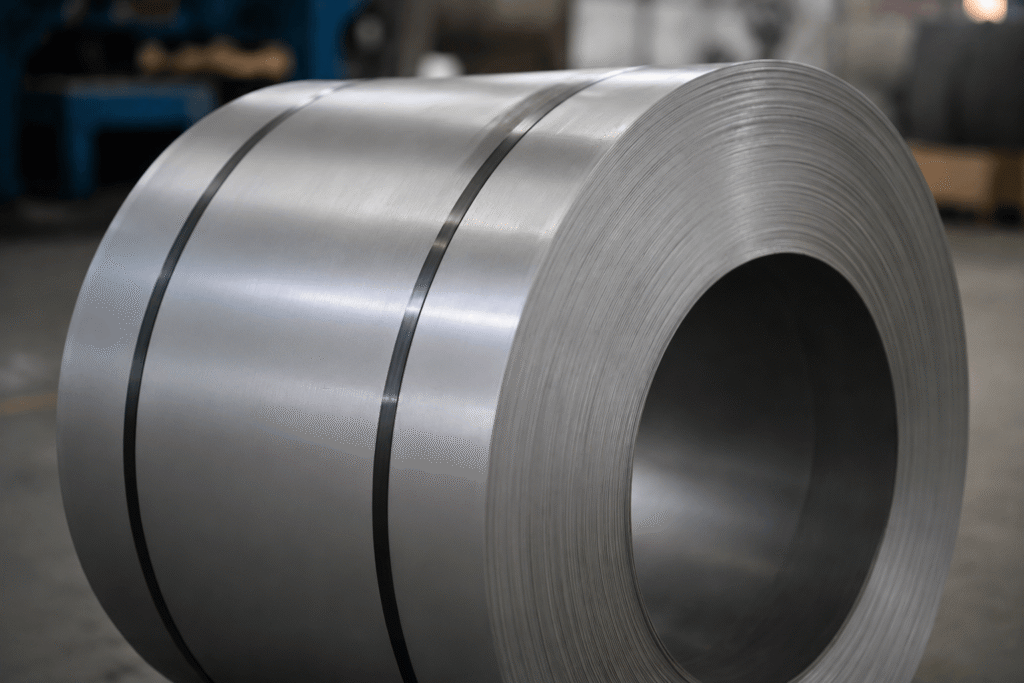
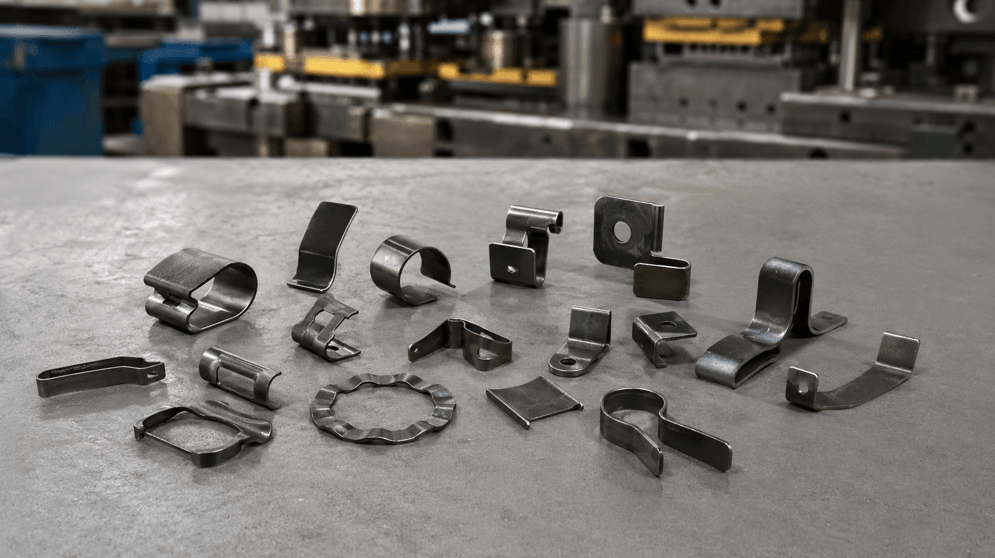
Manganese steel is not a single material grade. In metal stamping and sheet metal manufacturing, the term often refers to medium- or high-carbon manganese steels such as 65Mn, which are commonly used for spring clips, retaining parts, washers, fixtures and wear-resistant components.
65Mn is relatively easy to stamp and form in its annealed or softened condition. However, its strength, hardness and elasticity have not yet been fully developed at this stage. After stamping, bending or forming, the components normally require quenching and tempering to achieve the specified mechanical properties.
2. What Are the Characteristics of 65Mn Manganese Steel?
65Mn is a commonly used spring steel. The number “65” represents a nominal carbon content of approximately 0.65%, while “Mn” indicates the addition of manganese.
Manganese improves hardenability, allowing the material to achieve higher strength, hardness, elasticity and wear resistance after appropriate heat treatment.
Typical applications of 65Mn include:
- Spring clips and elastic tabs
- Spring washers and retaining clips
- Saw blades, scrapers and cutting components
- Wear-resistant liners and mechanical transmission parts
- Precision stamped parts requiring repeated flexing or elastic recovery
However, the material grade only determines its performance potential. Whether the finished component meets its application requirements also depends on its heat-treated microstructure, hardness, dimensional accuracy and residual stress.
3. Why Is Heat Treatment Required After Forming?
To reduce stamping die loads and minimize cracking during bending, drawing and forming, 65Mn steel sheet is usually processed in an annealed or relatively soft condition.
However, soft-state 65Mn generally does not provide sufficient hardness, strength or elasticity. Without heat treatment, a component may meet its dimensional and appearance requirements but still suffer from insufficient spring force, permanent deformation, rapid surface wear or a shortened fatigue life.
Heat treatment after forming normally consists of two main stages: quenching and tempering.
3.1 Quenching
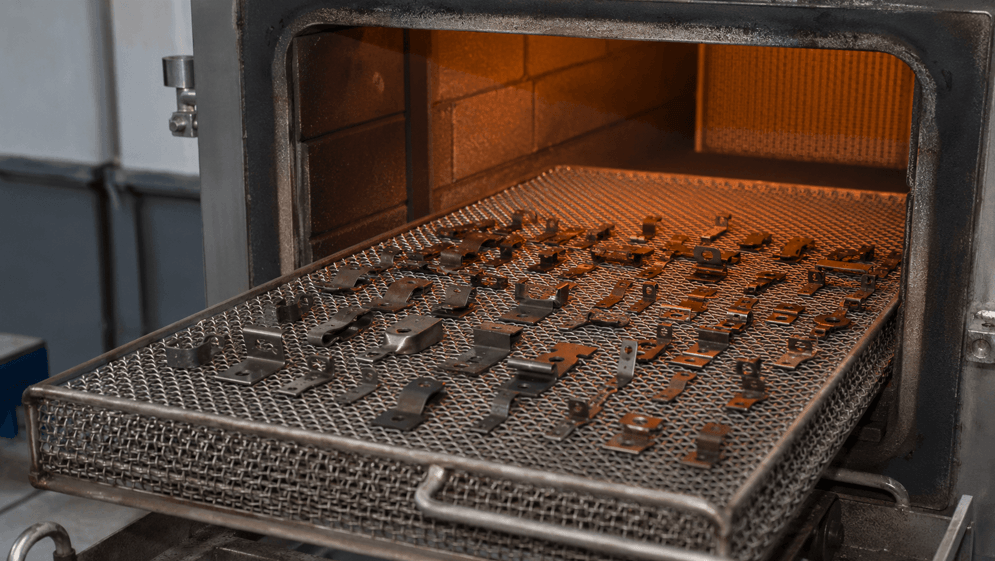
During quenching, the component is heated to an appropriate temperature and held long enough to obtain a relatively uniform austenitic structure. It is then cooled rapidly using a suitable quenching medium.
After quenching, the material develops a predominantly martensitic structure, significantly increasing its hardness, strength and wear resistance.
However, quenched 65Mn normally contains high residual stress and increased brittleness. Without subsequent tempering, the component may crack or fracture during assembly, bending or impact loading.
3.2 Tempering
Tempering involves reheating the quenched component to a suitable temperature below its critical transformation point, holding it for a controlled period and then cooling it again.
The main purposes of tempering are to:
- Reduce residual stresses produced during quenching
- Decrease brittleness and the risk of fracture
- Improve toughness and fatigue performance
- Adjust hardness and elasticity to the required level
- Stabilize the dimensions and internal microstructure
For 65Mn, maximum hardness is not always the best result. A suitable heat-treatment process must balance hardness, strength, elasticity, toughness and fatigue life.
| Material condition | Main characteristics | Potential limitations |
|---|---|---|
| Annealed or softened | Easy to stamp, bend and form | Insufficient strength, hardness and elasticity |
| After quenching | Significantly increased hardness and strength | High residual stress and brittleness |
| After quenching and tempering | More balanced strength, elasticity and toughness | Heat-treatment parameters must be carefully controlled |
Low-temperature tempering generally retains higher hardness and wear resistance, but the component may have relatively lower toughness. Increasing the tempering temperature can improve toughness and elasticity, although hardness will decrease.
The tempering parameters should therefore be selected according to the actual application rather than simply targeting the highest possible hardness.
FAQ
It can be stamped and formed without heat treatment, but it will normally not provide the strength, hardness, elasticity and wear resistance required for spring components.
No. Excessive hardness can reduce toughness and fatigue life, causing the component to fracture during assembly, bending or impact loading.
Complex components are normally stamped and formed in a softened condition before quenching, tempering and any necessary flattening. When pre-hardened steel strip is used, die wear, springback and forming-crack risks must be evaluated in advance.
Common causes include asymmetrical component geometry, uneven material thickness, residual stamping stress, unsuitable furnace loading, uneven heating and differences in quenching speed.
Yes. Heat treatment and flattening are normally completed before black oxide coating, electroplating, phosphating or other surface treatments, preventing high temperatures from damaging the final coating.
The drawing should specify the material grade, heat-treatment method, target hardness, hardness inspection location, flatness, surface treatment and whether decarburization is permitted. Simply stating “65Mn + heat treatment” is not sufficient.
📧 sales@innoway-metalparts.com
🌐 www.innoway-metalparts.com
📞 +86 18824570656