1. What Is Laser Marking?
Laser marking, also known as laser engraving, is a non-contact process that uses a focused laser beam to create permanent marks on a product surface. These marks can include logos, warning icons, QR codes, barcodes, serial numbers, batch codes, model numbers, decorative lines, and technical information. Unlike printing, labeling, or stamping, laser marking does not rely on ink, stickers, or physical cutting tools. Instead, the laser changes the material surface directly, which helps create a clean and durable result.
Laser marking is useful when a product needs long-term identification, brand recognition, traceability, or a professional surface finish. It is widely used on metal parts, plastic housings, electronic components, tools, panels, medical devices, automotive parts, and custom products. Because the mark becomes part of the product surface, it is usually harder to remove than printed text or labels. This makes laser marking a practical choice for both appearance-focused products and industrial parts that need reliable identification.
2. How Does Laser Marking Work?
A laser marking machine usually includes a laser source, scanning system, focusing lens, control software, and a working platform. The supplier loads the artwork, text, QR code, serial number rule, or production data into the software. The software then converts that information into a laser path. During marking, the focused beam moves quickly across the selected area and creates the visible mark according to the digital file.
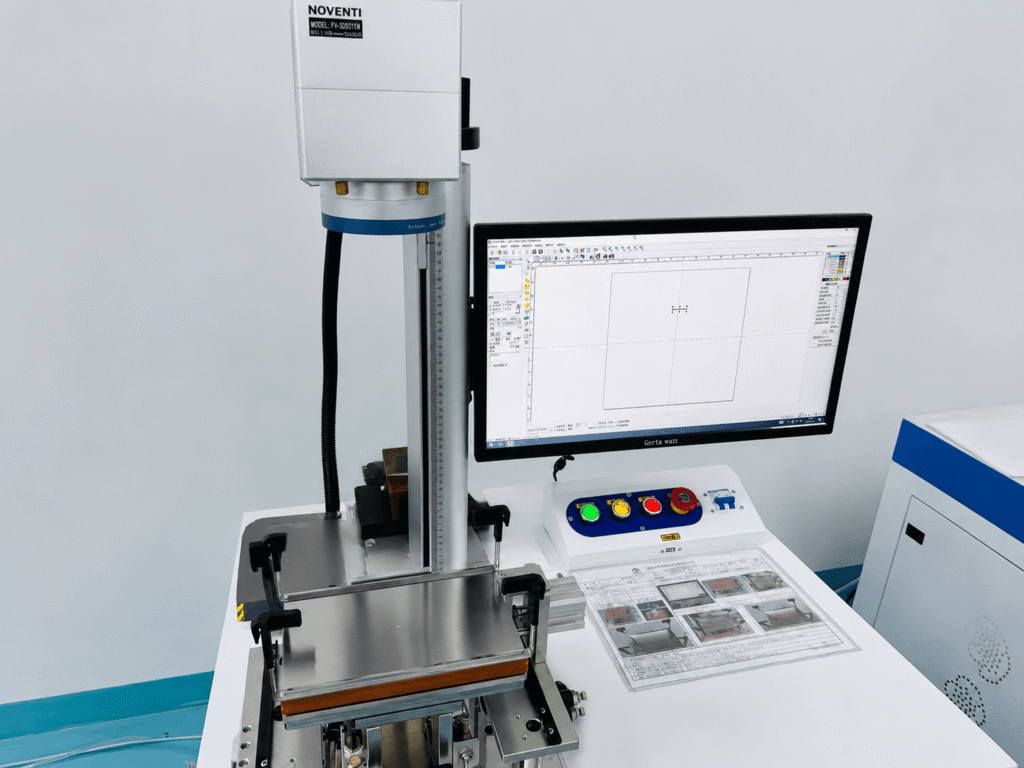
The final mark is formed through a controlled reaction between the laser and the material surface. Depending on the material, the laser may cause oxidation, heat discoloration, coating removal, foaming, carbonization, or very light material removal. Key settings include power, speed, frequency, focal distance, fill spacing, and number of passes. If the settings are too weak, the mark may be pale or unreadable. If they are too strong, the surface may burn, deform, yellow, or become rough. This is why sample testing is important before mass production.
3. What Materials Can Be Laser Marked?
Laser marking can be used on many industrial and consumer product materials. However, not every material produces the same result. Material grade, color, surface treatment, coating thickness, and additives can all affect the final engraving effect.
| Material Type | Examples | Typical Result | Buyer Tip |
| Metals | Stainless steel, aluminum alloy, copper, iron, titanium | Black, white, gray, shallow engraving, deep engraving | Good for nameplates, tools, hardware, and parts |
| Anodized aluminum | Black or colored anodized aluminum | Coating removal, white mark, exposed base color | Common for panels and appearance parts |
| Plastics | ABS, PC, PA, POM, PP, PE | White, gray, color change, slight texture | The result depends heavily on material formula |
| Wood and leather | Wooden tags, packaging, leather goods | Brown burned mark or decorative pattern | Good for gifts and packaging details |
| Acrylic and glass | Clear parts, displays, panels | Frosted, etched, or matte effect | Need to control cracking and edge damage |
| Coated parts | Painted, plated, powder-coated, or sprayed parts | Coating removal or contrast mark | Coating thickness and adhesion matter |
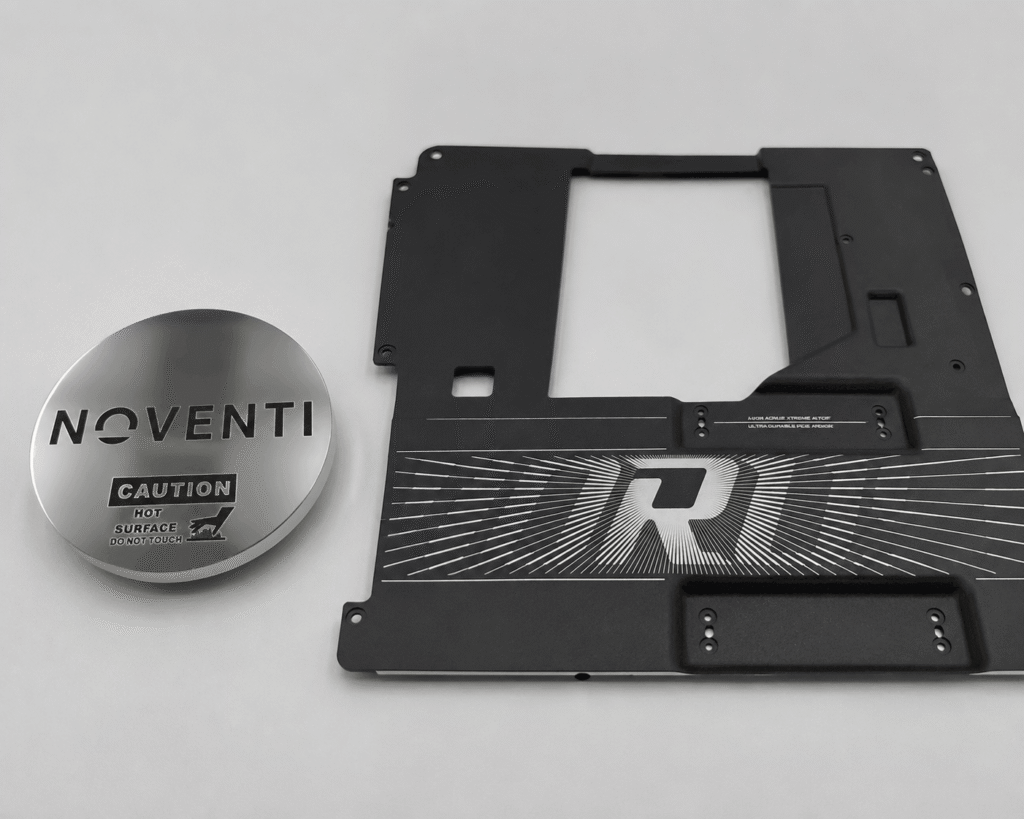
4. Key Advantages of Laser Marking
The main advantages of laser marking are durability, precision, clean appearance, and low consumable use. Since the mark is created directly on the product surface, it is generally more resistant to peeling, rubbing, and normal cleaning than ink printing or labels. The process also does not require printing plates, ink, solvents, or label materials, which can reduce consumable management and avoid problems such as ink fading, label lifting, or adhesive residue.
Laser marking is also suitable for fine and repeatable details. Small text, thin lines, logos, QR codes, barcodes, and variable serial numbers can be produced clearly when the artwork and parameters are well prepared. Once the fixture, program, and marking parameters are confirmed, the same job can be repeated efficiently across a production batch. This makes laser marking useful for both decorative product surfaces and functional traceability requirements.
5. Common Applications of Laser Marking
Laser marking is widely used in electronics, hardware, machinery, automotive, medical, home appliance, packaging, gift, and industrial manufacturing fields. In electronics, it is often applied to housings, buttons, panels, connectors, and interface labels. In hardware and machinery, it is used for metal nameplates, tools, aluminum panels, stainless steel parts, specification plates, and part numbers. In medical and automotive industries, it is commonly used for permanent identification and traceability.
Typical marking content includes brand logos, product names, warning icons, QR codes, barcodes, serial numbers, batch codes, production dates, model numbers, certification information, and anti-counterfeiting marks. For appearance parts, buyers usually care more about contrast, line sharpness, and surface cleanliness. For industrial parts, readability, position accuracy, code scanning, and durability testing may be more important. Understanding the final use of the product helps the supplier choose the right marking approach.
FAQ
In most cases, they refer to similar processes. “Laser engraving” is often used in product and customization scenarios, while “laser marking” is more common in industrial contexts.
Under normal processing conditions, laser engraved marks are usually more durable than ink printing. However, durability depends on the material, surface treatment, processing parameters, and testing standards.
Yes, many plastic parts can be laser engraved. However, the final result depends on the plastic type, color, additives, and laser parameters. Sample testing is recommended before mass production.
Some metals can show colored effects under specific laser parameters, but color stability and batch consistency can be more difficult to control. In industrial applications, black, white, gray, or base-color marks are more common.
Sample testing helps confirm color, clarity, position, durability, and production feasibility. It reduces the risk of rework and ensures the final result meets project requirements.
Vector files such as AI, CDR, DXF, SVG, or PDF are usually preferred because they keep lines and logos sharp. For QR codes, serial numbers, or small text, clear original files help improve marking accuracy.
Production time depends on order quantity, engraving area, product positioning, and whether a custom fixture is needed. For new projects, the timeline should include sample testing, approval, mass production, and final inspection.
Engraving depth depends on the material, laser power, processing time, and quality requirement. Deeper engraving usually takes longer and may cost more than standard surface marking.