1. Choosing the Right Manufacturing Process
When developing a custom metal part, one important question is whether to use metal stamping or sheet metal fabrication. Both processes can produce brackets, housings, structural components, and precision metal parts. However, they differ significantly in tooling investment, production efficiency, design flexibility, and long-term manufacturing costs.
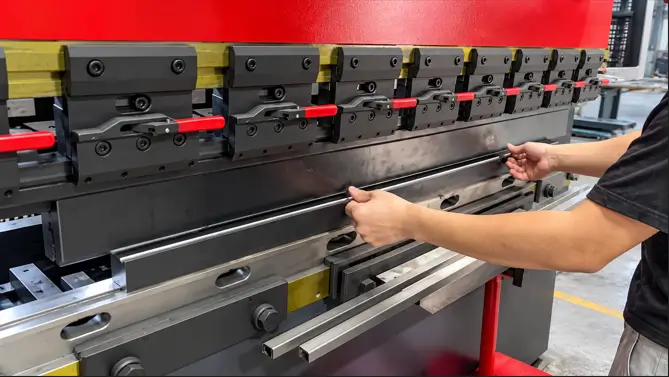

For OEM buyers and design engineers, the right choice depends on more than part geometry. Annual production volume, material thickness, dimensional requirements, and expected design changes must also be considered.
This guide explains how to select the most suitable process for your project while balancing cost, quality, and delivery requirements.
2. Metal Stamping vs. Sheet Metal Fabrication: Key Differences
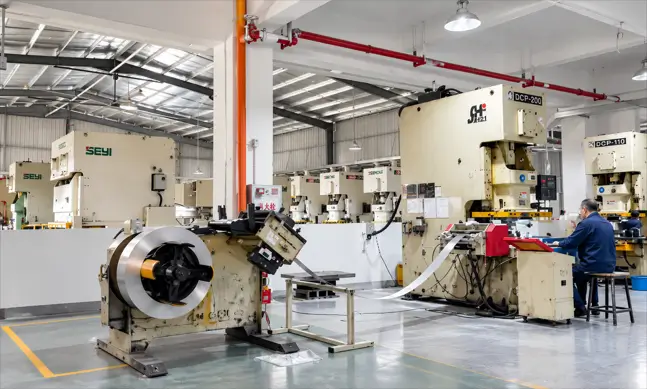
Metal stamping uses stamping presses and dedicated dies to cut, punch, bend, or form metal sheets into specific shapes. Once the tooling is validated, stamping can deliver excellent repeatability and high production efficiency.
Sheet metal fabrication combines processes such as laser cutting, CNC punching, press brake bending, welding, and assembly. It offers greater flexibility, especially for customized products and projects with relatively low production volumes.
| Comparison | Metal Stamping | Sheet Metal Fabrication |
|---|---|---|
| Initial tooling cost | Generally higher | Generally lower |
| Unit cost at high volume | Usually lower | Often higher |
| Production efficiency | High for repeat parts | Depends on operations |
| Design flexibility | Limited after tooling approval | Relatively high |
| Design changes | May require die modification | Often easier to implement |
| Typical applications | Brackets, contacts, clips, formed parts | Enclosures, cabinets, chassis, large brackets |
| Ideal production stage | Stable, repeat production | Prototypes, low-volume or customized production |
| Dimensional Accuracy | Generally higher for suitable die-controlled features | High, but depends on individual processes and setups |
| Repeatability | Excellent consistency in high-volume production | Good, but can be affected by multiple setups and operations |
Neither process is universally better. The goal is to select the manufacturing route that best fits the product’s technical and commercial requirements.
3. Which Parts Are Best Suited for Metal Stamping or Sheet Metal Fabrication?
Choosing the right manufacturing process depends on part geometry, dimensional tolerances, material properties, production volume, and design stability.
While both processes can manufacture a wide range of metal components, each offers distinct advantages for different applications.
3.1 Parts Best Suited for Metal Stamping
Metal stamping is particularly suitable for components requiring high precision, excellent repeatability, and consistent high-volume production.
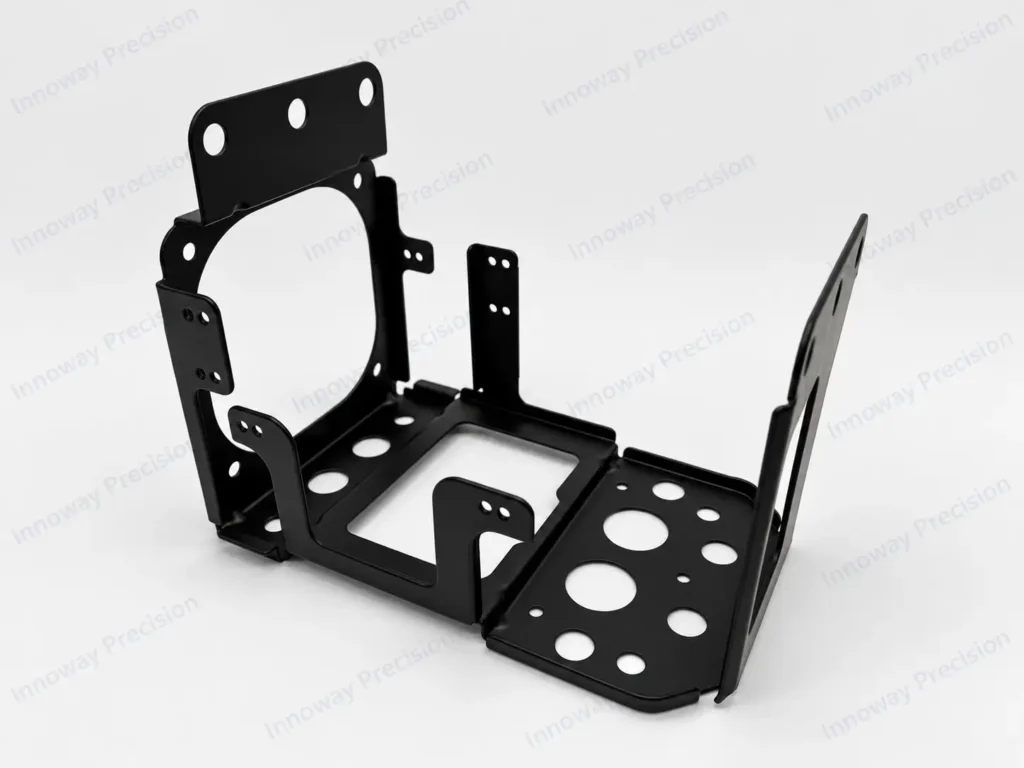
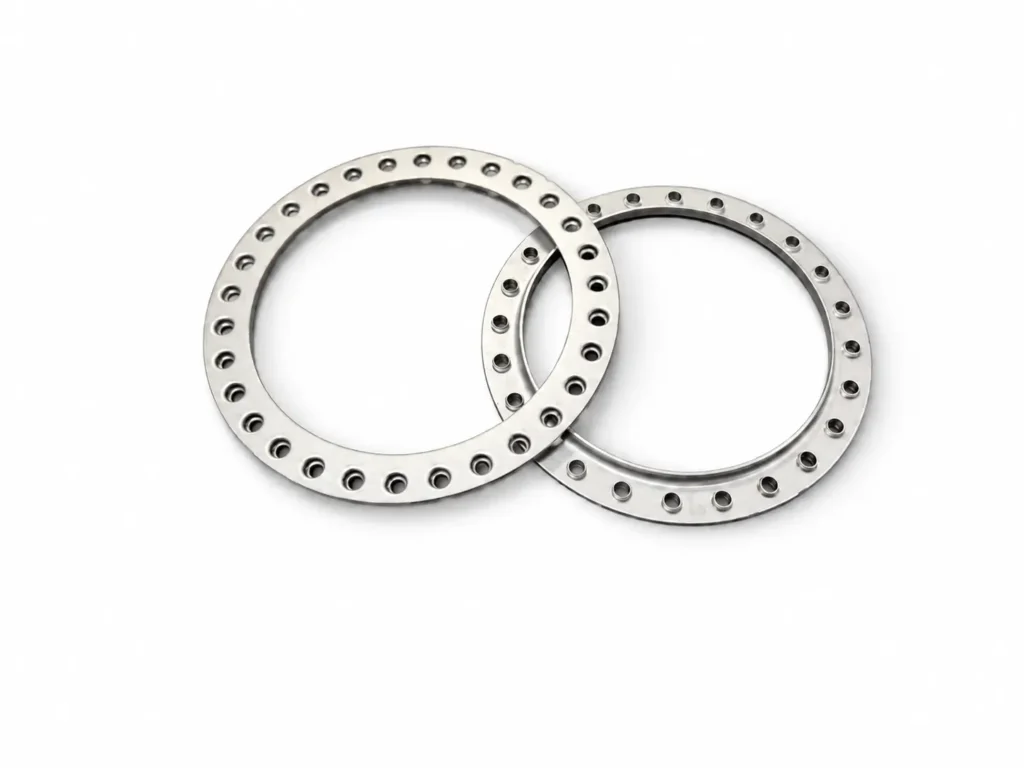
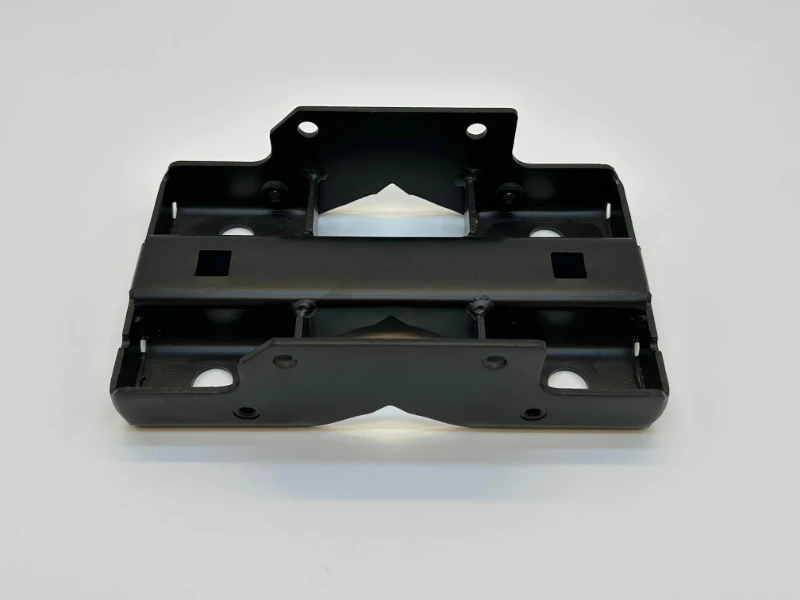
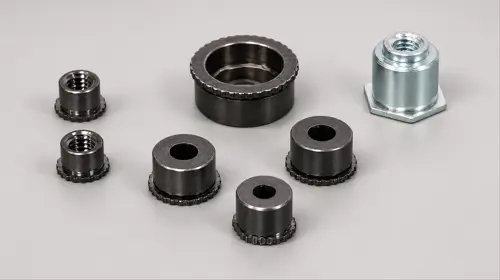
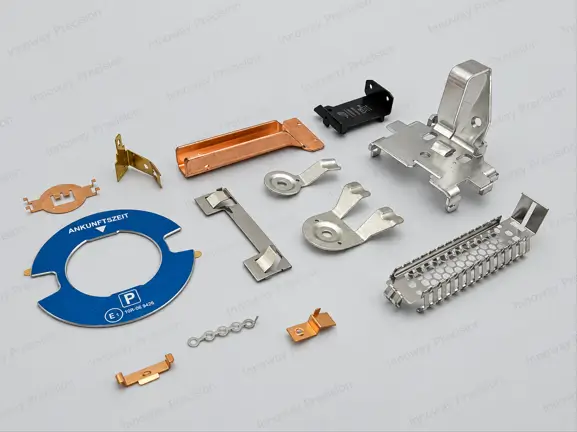
Typical applications include automotive brackets, electrical terminals, spring clips, EMI shielding components, heat sink parts, and precision-formed metal components.
Dedicated stamping dies can precisely control holes, flanges, embossments, and other critical features, providing excellent dimensional consistency across large production batches.
Metal stamping is generally preferred when:
- Parts require tight tolerances and high dimensional repeatability.
- The product design is stable, with minimal expected changes.
- Production quantities justify dedicated tooling investment.
- Multiple forming and punching operations can be integrated into a die.
3.2 Parts Best Suited for Sheet Metal Fabrication
Sheet metal fabrication is ideal for products requiring design flexibility, larger dimensions, complex assemblies, or relatively low production volumes.
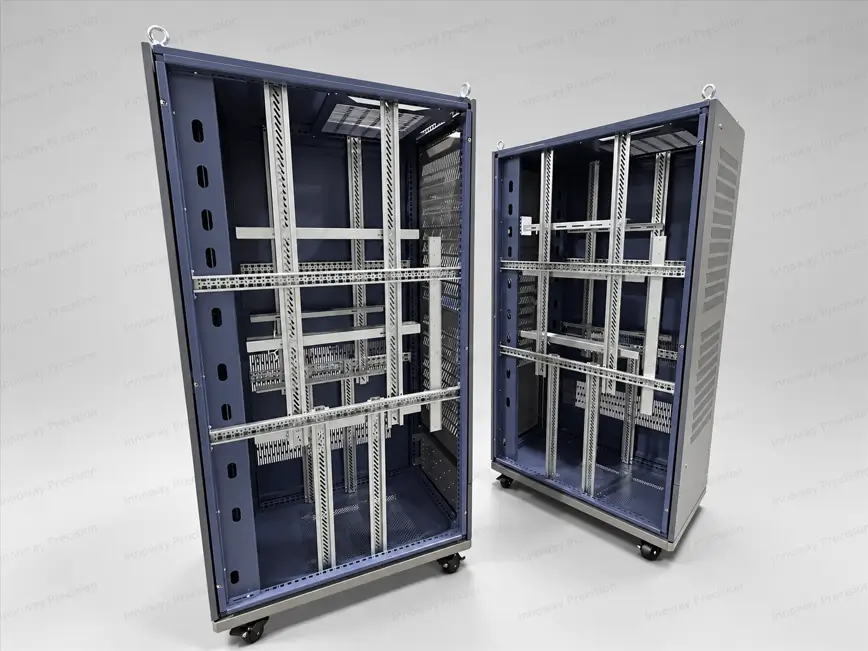


Typical applications include electrical cabinets, industrial enclosures, equipment chassis, machine covers, and custom structural assemblies.
By combining laser cutting, press brake bending, welding, and assembly, sheet metal fabrication can accommodate complicated product designs without extensive dedicated tooling.
Sheet metal fabrication is generally preferred when:
- Products are large, complex, or require multiple welded components.
- Production quantities are relatively low.
- Designs may require frequent modifications.
- Short prototype lead times and lower initial tooling costs are priorities.
4. Cost Comparison: When Does Stamping Become More Economical?
One of the biggest differences between stamping and sheet metal fabrication is how manufacturing cost changes with production volume.
Metal stamping typically involves higher initial tooling costs but lower unit costs during mass production. Sheet metal fabrication usually requires less initial investment, but manufacturing costs may remain higher as production quantities increase.
Example: Steel Mounting Bracket Cost Comparison
Consider a hypothetical steel mounting bracket with the following costs:
| Cost Item | Sheet Metal Fabrication | Metal Stamping |
|---|---|---|
| Initial tooling investment | $0 | $3,000 |
| Unit manufacturing cost | $0.80 | $0.35 |
| Total for 1,000 pcs | $800 | $3,350 |
| Total for 10,000 pcs | $8,000 | $6,500 |
| Total for 30,000 pcs | $24,000 | $13,500 |
Manufacturing Cost vs. Production Quantity
Illustrative Cost Model (USD)
Figure 1. Metal stamping becomes more cost-effective as production volume increases and the initial tooling investment is spread across more parts.
Note: Illustrative data only. Not an actual manufacturing quotation.
Calculating the Break-Even Quantity
The theoretical break-even quantity can be calculated as:
Using the example above:
Under these assumptions, stamping becomes more economical when cumulative production exceeds approximately 6,667 pieces.
Engineering Tip: There is no universal minimum quantity for metal stamping. The break-even point should be determined using actual tooling quotations, part costs, and expected product lifecycle demand.
6. From Prototype to Mass Production: Can Both Processes Be Used?
Yes. Sheet metal fabrication and stamping can be used at different stages of the same product’s lifecycle.
From Prototype to Mass Production

Stage 1: Prototype Development
Laser cutting, press brake bending and sometimes simple tooling allow engineers to produce samples without investing in dedicated stamping dies. This helps verify dimensions, fit, and assembly functionality.
Stage 2: Design Validation
After prototype testing, engineers finalize material specifications, critical dimensions, and tolerance requirements. A Design for Manufacturing (DFM) review identifies opportunities to improve manufacturing feasibility and reduce costs.
Stage 3: Mass Production
Once the design is stable and demand becomes predictable, dedicated stamping tooling can be evaluated. For suitable components, switching to stamping may offer lower unit costs, improved repeatability, shorter production cycles, and more consistent quality.
7. How Innoway Precision Supports Your Manufacturing Projects
At Innoway Precision, we provide custom metal stamping, sheet metal fabrication, CNC machining, tooling support, and assembly services for OEM customers. Our manufacturing capabilities include stamping presses up to 400 tons, sheet metal forming, welding, secondary operations, and custom assembly.
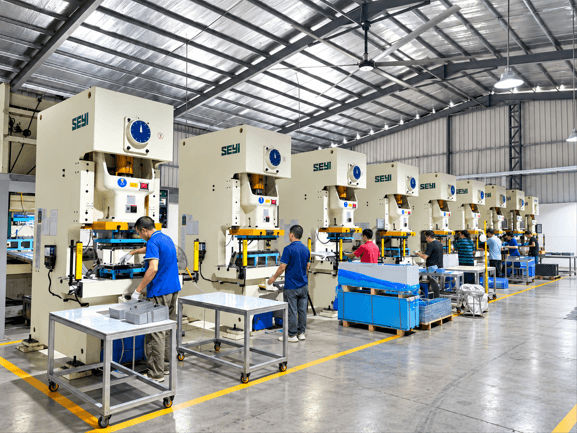
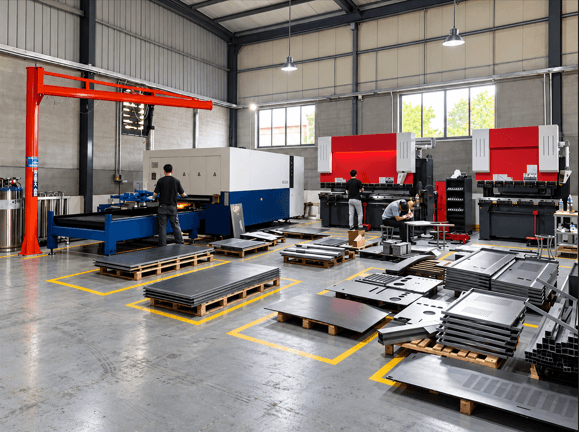
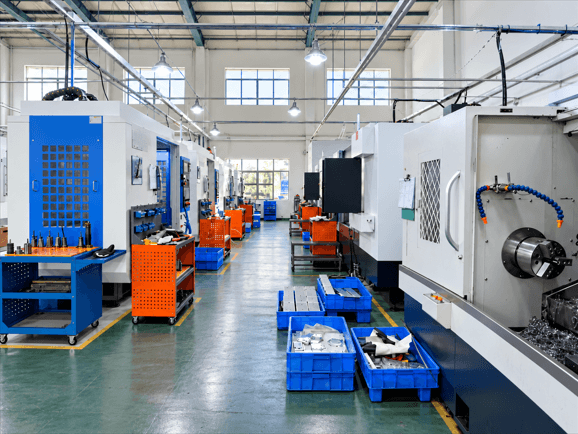
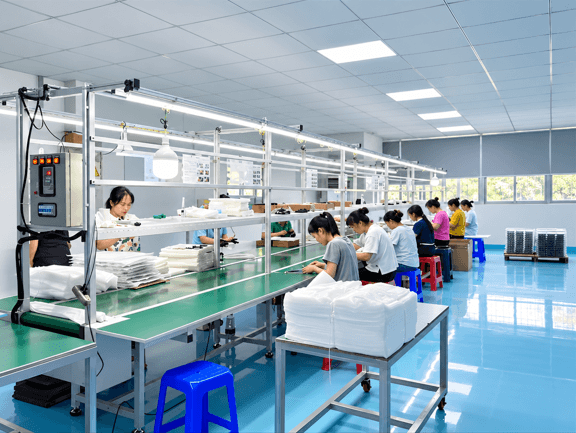
Rather than recommending a single manufacturing process for every component, our engineering team evaluates product drawings, material specifications, dimensional requirements, and production quantities to identify practical manufacturing solutions.
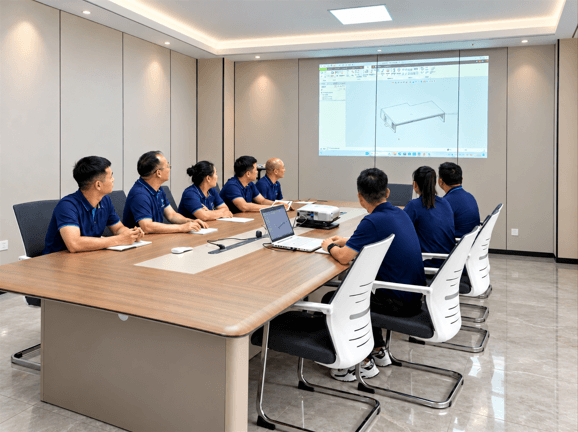
For high-volume precision components, we focus on tooling design, dimensional consistency, and efficient production. For customized enclosures, structural components, and lower-volume projects, we provide flexible sheet metal fabrication solutions.
Metal stamping is often the better choice for high-volume components requiring excellent dimensional accuracy, repeatability, and production efficiency. Sheet metal fabrication provides greater flexibility for prototypes, custom products, and complex assemblies.
Frequently Asked Questions
Generally, yes, for features well suited to precision stamping. Dedicated dies provide excellent dimensional control and repeatability, especially in high-volume production. Actual accuracy depends on material, geometry, tooling quality, and process capability.
Stamping generally offers lower unit costs for high-volume production but requires an initial tooling investment. Fabrication is often more economical for prototypes, small batches, and products with frequent design changes.
Automotive brackets, electrical contacts, spring clips, shielding components, and other parts requiring consistent dimensions and repeat production are common applications.
Yes. Both processes can manufacture stainless steel, aluminum, carbon steel, copper, and other metal components. The preferred method depends on material thickness, mechanical properties, part geometry, and quantity.
Yes. Many products begin with laser cutting and bending during prototype development and later transition to stamping. A DFM review should confirm tooling feasibility, dimensional requirements, and forming characteristics.