What is 3D printing
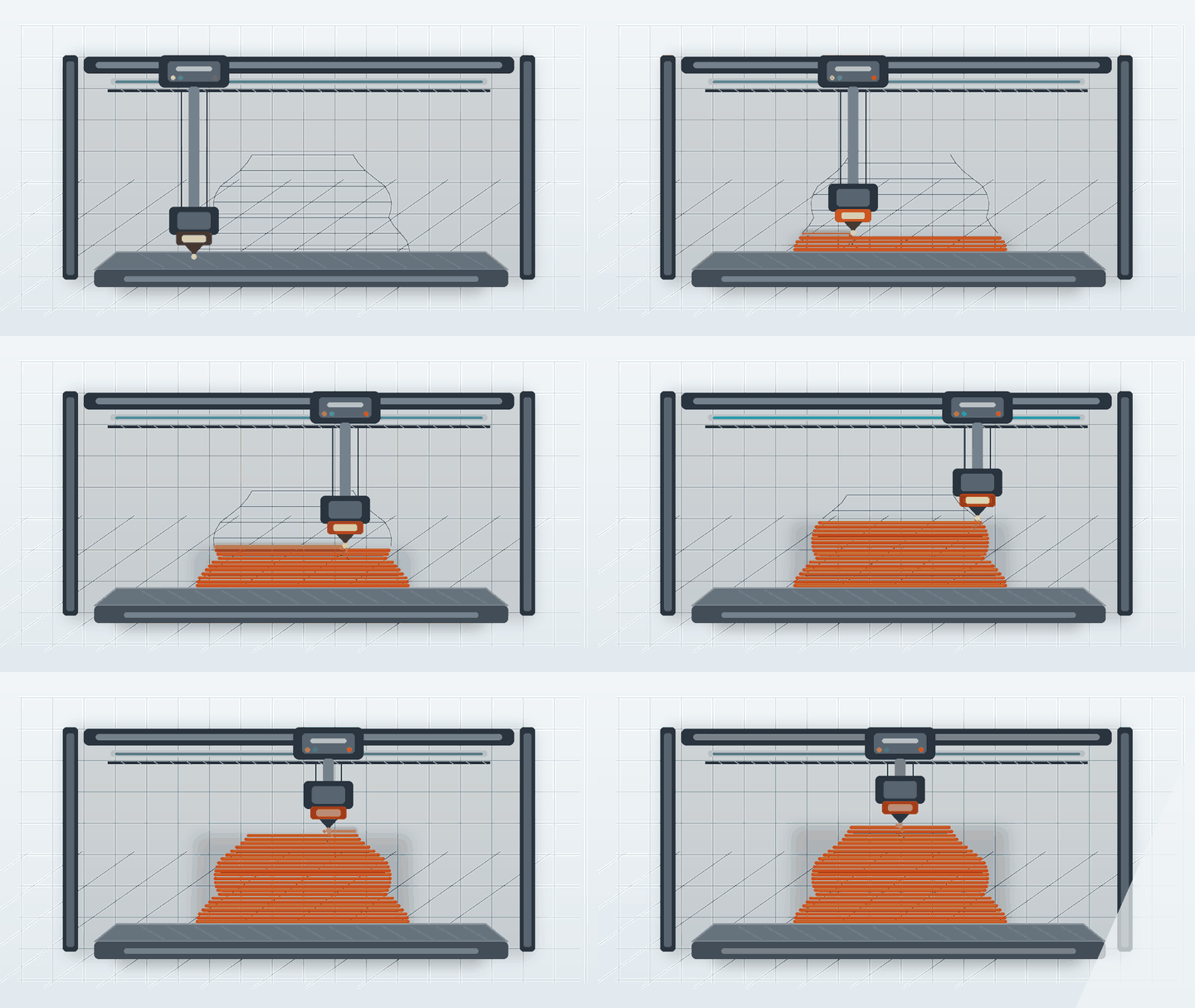
3D printing, also known as additive manufacturing, creates parts by building material layer by layer from a digital model. Different technologies vary significantly in material compatibility, accuracy, mechanical properties, surface finish, production speed, and cost.
There are many types of 3D printing technologies, each designed for different materials, accuracy requirements and applications. From low-cost FDM prototypes to high-performance metal 3D printing, understanding the differences can help engineers and buyers select the right manufacturing process. Below are eight of the most common 3D printing technologies used today.
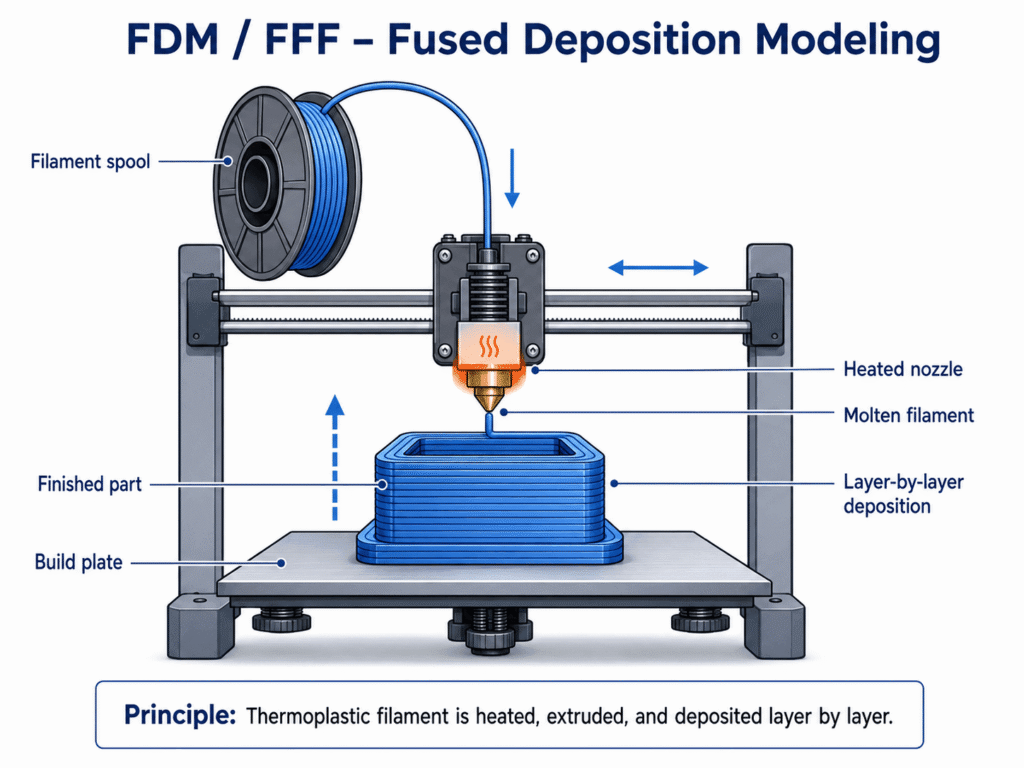
1. FDM / FFF – Fused Deposition Modeling
FDM melts thermoplastic filament and deposits it layer by layer through a heated nozzle.
Common materials include PLA, ABS, PETG, nylon, and carbon-fiber-reinforced plastics.
Best for: prototypes, fixtures, concept models, and low-cost functional parts.
Its biggest advantages are low cost and accessibility. However, visible layer lines and relatively lower dimensional accuracy make it less suitable for highly precise cosmetic parts.
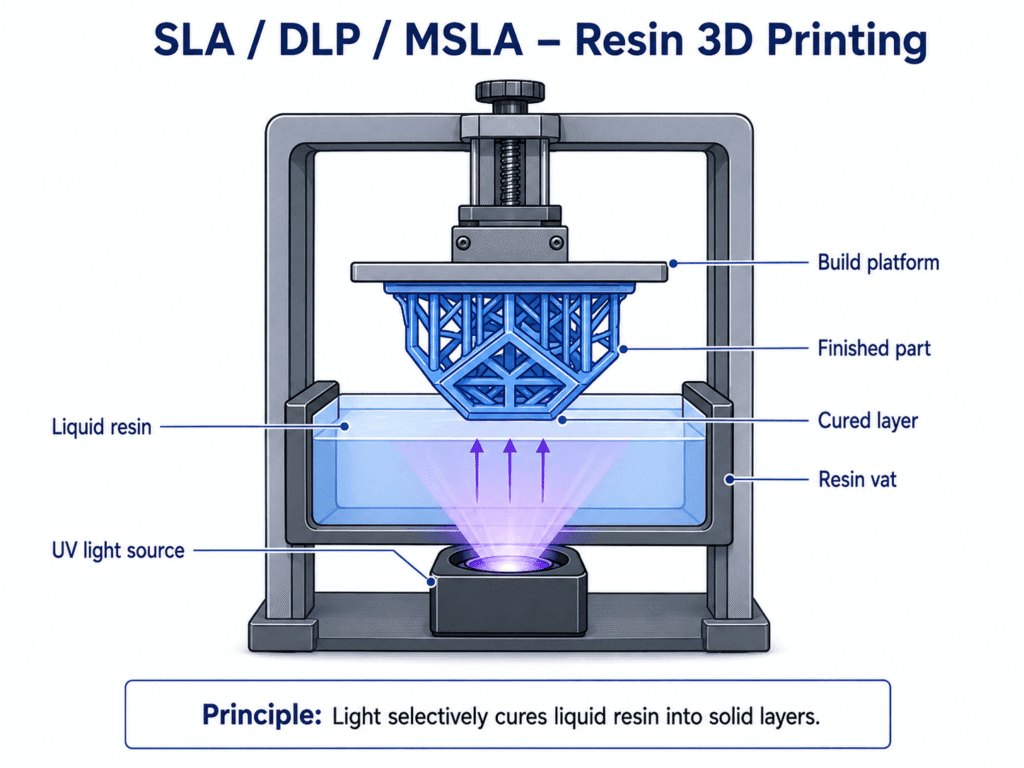
2. SLA / DLP / MSLA – Resin 3D Printing
These technologies use light to selectively cure liquid photopolymer resin.
Compared with FDM, resin printing can produce much finer details and smoother surfaces.
Best for: appearance prototypes, small precision parts, medical models, and detailed product samples.
The main limitation is material performance. Standard resins may not provide the same long-term toughness, heat resistance, or durability as engineering thermoplastics.
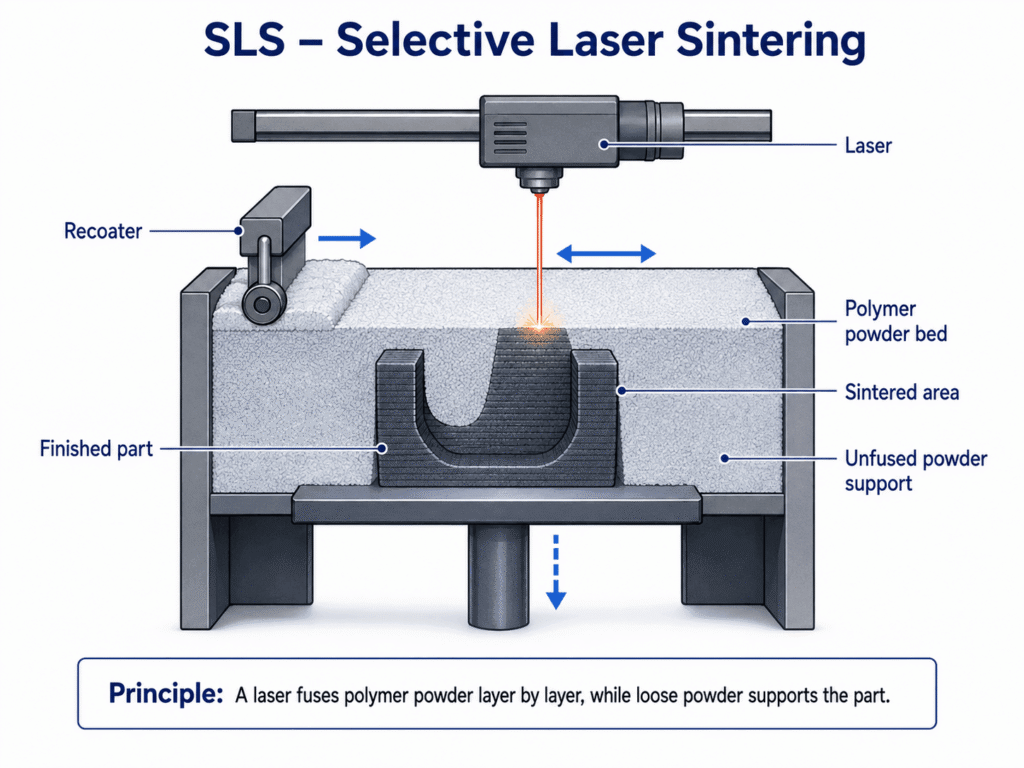
3. SLS – Selective Laser Sintering
SLS uses a laser to fuse polymer powder, most commonly PA11 or PA12 nylon.
Because surrounding powder supports the part during printing, additional support structures are generally unnecessary.
Best for: functional prototypes, complex plastic components, clips, housings, and low-volume production.
SLS parts usually offer better functional strength than standard resin parts, although the surface tends to have a slightly grainy texture.
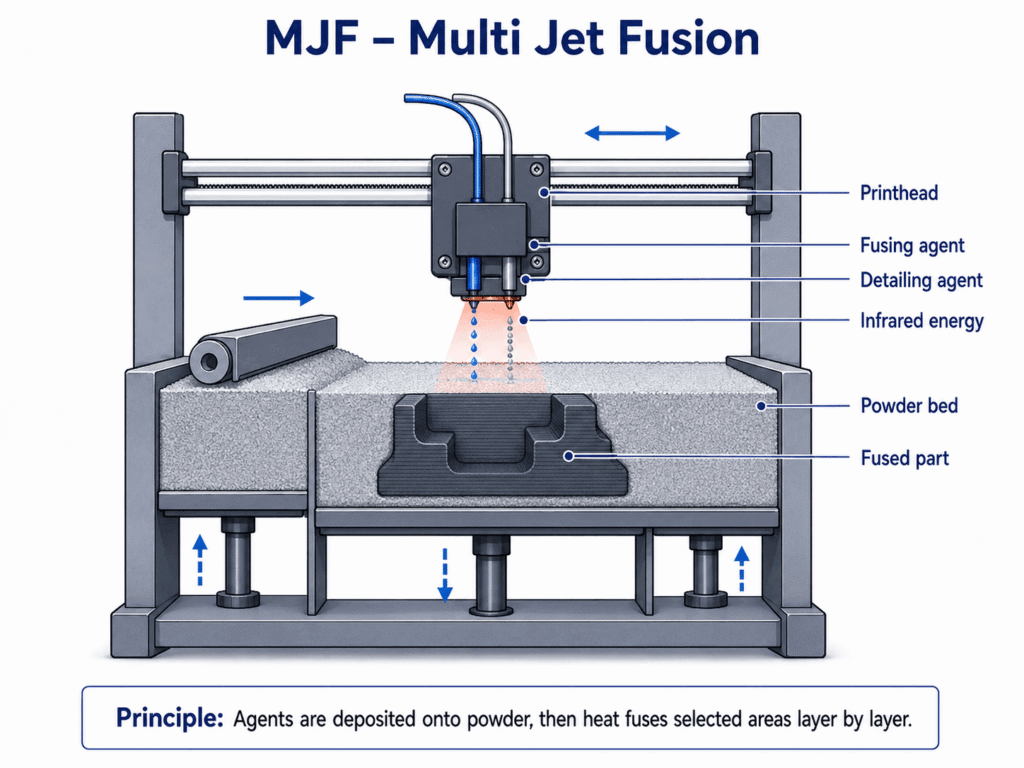
4. MJF – Multi Jet Fusion
MJF uses polymer powder together with fusing agents and thermal energy to produce parts.
It is particularly suitable for manufacturing multiple functional plastic parts in one production batch.
Best for: PA12 functional parts, enclosures, jigs, fixtures, and low-volume end-use components.
Compared with many prototyping technologies, MJF offers a good balance between production speed, mechanical properties, and batch efficiency.
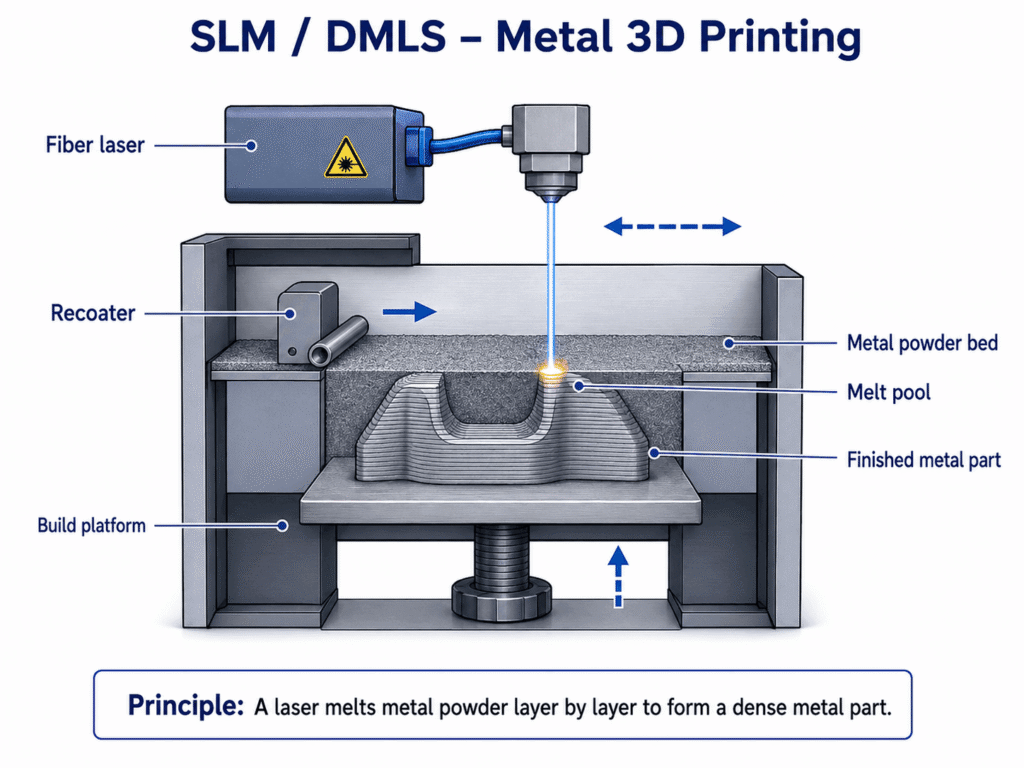
5. SLM / DMLS – Metal Laser Powder Bed Fusion
SLM and DMLS use high-power lasers to fuse metal powder layer by layer.
Common materials include aluminum alloys, stainless steel, titanium alloys, tool steels, and nickel-based superalloys.
Best for: aerospace parts, medical components, molds, automotive parts, and complex industrial components.
The greatest advantage is the ability to manufacture structures that are difficult or impossible to machine conventionally, such as internal cooling channels and lightweight lattice structures.
However, CNC machining, heat treatment, or surface finishing is often still required after printing.
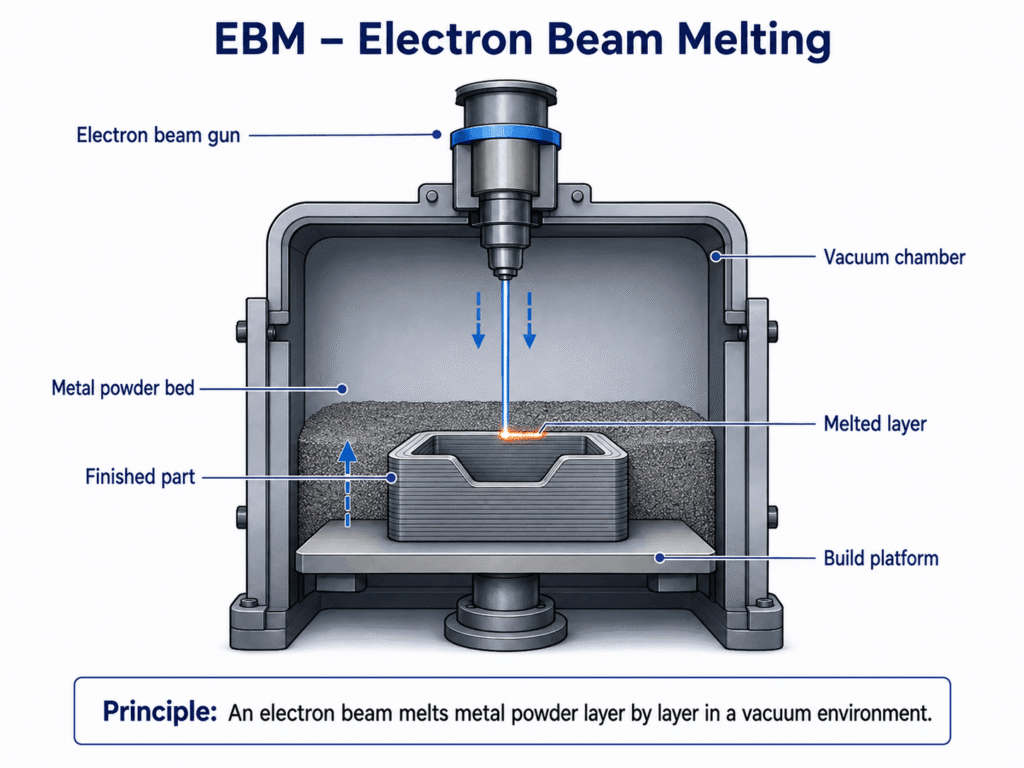
6. EBM – Electron Beam Melting
EBM uses an electron beam rather than a laser to melt metal powder in a vacuum environment.
It is particularly suitable for materials such as titanium alloys and other high-performance metals.
Best for: aerospace components, medical implants, and high-performance titanium parts.
EBM can produce strong metal components but normally has a rougher surface and lower fine-detail resolution than some laser-based metal printing technologies.
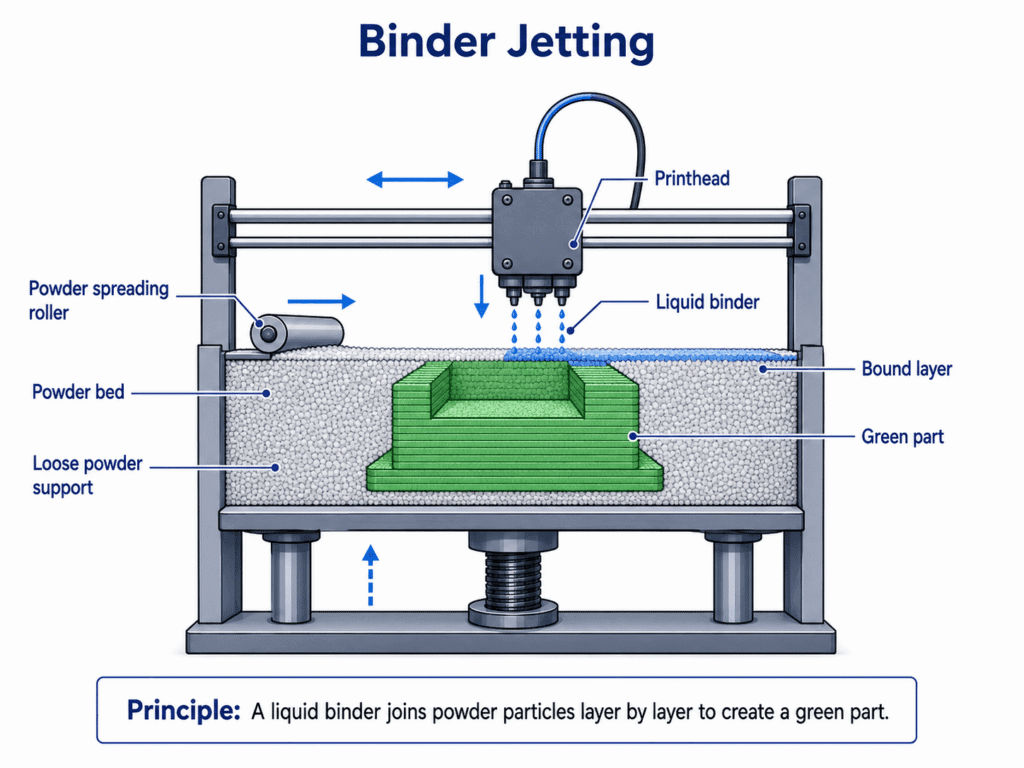
7. Binder Jetting
Binder Jetting selectively deposits a liquid binder onto layers of powder.
The powder can be metal, ceramic, or foundry sand depending on the application.
Best for: metal parts, casting sand molds, complex cores, and higher-volume additive manufacturing.
Metal Binder Jetting parts normally require debinding and sintering after printing. Because shrinkage occurs during sintering, dimensional control is an important engineering consideration.
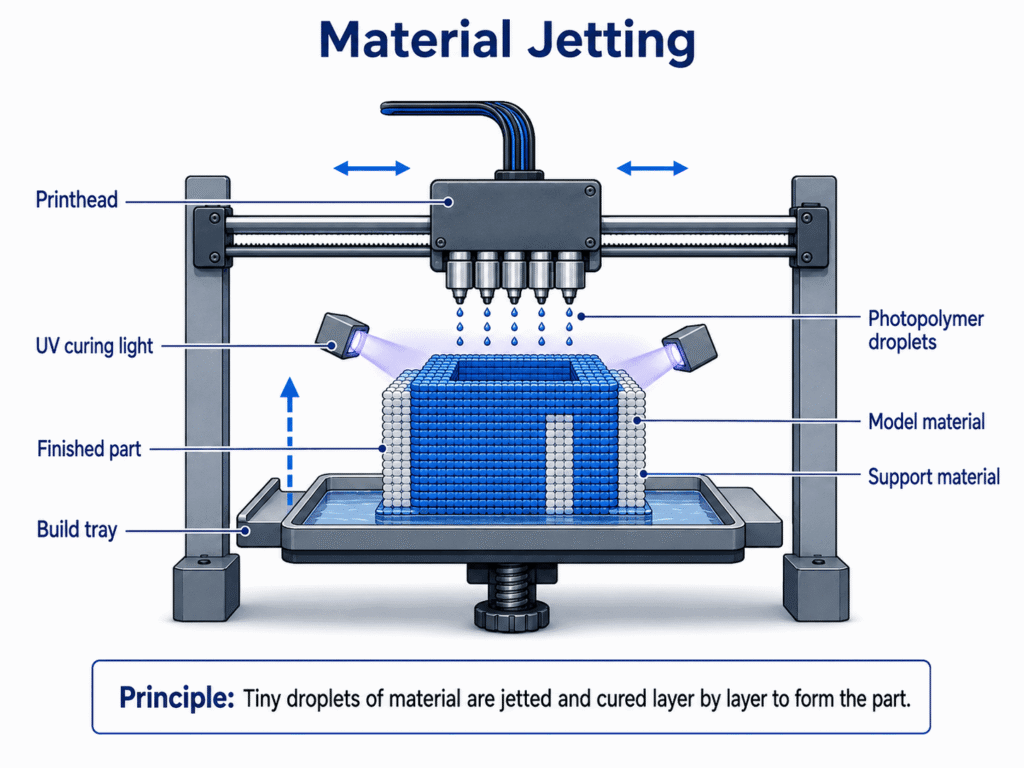
8. Material Jetting
Material Jetting deposits very small droplets of photopolymer or similar material and cures them layer by layer.
Its operating principle is somewhat similar to an inkjet printer, but instead of ink, it deposits printable material.
Best for: highly detailed prototypes, realistic visual models, multi-color parts, and multi-material prototypes.
Its main advantages are excellent surface quality and the ability to combine different colors or material properties. The disadvantages are relatively high material costs and limitations in long-term functional performance.
Which 3D Printing Technology Should You Choose?
| Technology | Material | Best For | Main Advantage |
|---|---|---|---|
| FDM / FFF | Thermoplastics | Low-cost prototypes | Low cost |
| SLA / DLP | Resin | Detailed prototypes | Smooth surface |
| SLS | Nylon powder | Functional parts | No support required |
| MJF | Nylon powder | Small-batch production | High productivity |
| SLM / DMLS | Metal powder | Metal functional parts | Complex metal geometry |
| EBM | Metal powder | Titanium parts | High-performance metals |
| Binder Jetting | Metal / ceramic / sand | Batch production | High printing speed |
| Material Jetting | Photopolymer | Visual prototypes | Multi-color/material |
3D Printing vs. Traditional Manufacturing
3D printing should not simply be viewed as a replacement for CNC machining, sheet metal fabrication, stamping, or injection molding. Its real advantage lies in design flexibility, rapid development, and the ability to manufacture highly complex geometries.
For example, a metal component with internal cooling channels may be ideal for metal 3D printing. But a simple sheet metal bracket required in quantities of 100,000 pieces will usually be much more economical to manufacture by stamping.
The right manufacturing process therefore depends on five key factors: Material, geometry, accuracy, production volume, and total cost.
Conclusion
The eight major 3D printing technologies each serve different purposes.
FDM is ideal for economical prototyping, SLA provides excellent surface detail, SLS and MJF are strong options for functional plastic parts, while SLM/DMLS and EBM are more suitable for high-performance metal components.
Binder Jetting provides another route toward higher-volume additive manufacturing, while Material Jetting is especially valuable when appearance, color, and material combinations are important.
There is no single “best” 3D printing technology—the best process is the one that matches the actual requirements of the part.
Frequently Asked Questions
Common 3D printing technologies include FDM/FFF, SLA/DLP, SLS, MJF, SLM/DMLS, EBM, Binder Jetting, and Material Jetting.
3D printing can use plastics, resins, nylon powders, metals, ceramics, and composite materials. Common materials include PLA, ABS, PETG, PA12, aluminum, stainless steel, and titanium.
SLA, DLP, and Material Jetting generally provide smoother surfaces and finer details than FDM or powder-based processes.
Yes. SLM, DMLS, and EBM can produce functional metal components using materials such as aluminum, stainless steel, titanium, and nickel alloys.
Accuracy depends on the technology, material, machine, and part geometry. Resin and industrial metal printing generally provide higher precision than basic FDM printing.
In most cases, no dedicated mold is required. This makes 3D printing especially suitable for prototypes, customized parts, and low-volume production.
It can be suitable for certain small, complex, or customized parts. However, for very high-volume production, injection molding, stamping, or other traditional manufacturing processes are often more economical.
Common limitations include relatively slow production speed, material cost, surface finish, build-size restrictions, and the need for post-processing.
For complex prototypes and low quantities, 3D printing can be more economical. CNC machining may be more suitable when tight tolerances, better surface finish, or higher production quantities are required.
Consider the material, part geometry, required accuracy, surface finish, mechanical performance, production quantity, and total cost before selecting a process.